How to Verify Insulator Supplier Capability and Delivery
for Power Projects
Short answer: an insulator supplier should be evaluated on three verifiable evidence layers — the defined scope of a documented quality system, an independent test report that names the exact model and material combination, and a specification-to-document cross-check tied to a delivery schedule the factory can actually hold. A catalog value such as a 70 kN rated failing load or a 255 mm creepage distance only becomes procurement-grade evidence when a document, a test record and a delivery commitment sit behind it.
This guide is written for utility procurement teams, EPC contractors and project engineers comparing insulator suppliers for grid, rail transit and wind power work. It shows how to move from catalog claims to checkable evidence, using published product records — the Ball-Head Suspension Ring QP-7, the porcelain insulator U70BP/146D, the glass insulator 70B and the polymer insulator FXB-24-70-785mm — as worked examples of what can and cannot be verified.
1. The Verification Gap Behind Most Insulator Procurement Risk
Insulators are selected by specification but judged by failure. The commercial risk in insulator sourcing is rarely a missing specification sheet — it is the distance between the parameters printed in a catalog and the evidence that the delivered units were built and tested to those parameters.
Three failure points appear repeatedly when procurement teams audit insulator suppliers:
- A specification with no document trail. A creepage distance, a failing load or a withstand voltage can be printed accurately on a datasheet and still not be traceable to a type test, a routine test or a batch record for the units actually shipped.
- A certificate whose scope does not reach the product. A quality certificate is issued to a legal entity, a manufacturing site and a product scope. If the scope wording does not cover the product class being ordered, the certificate proves a management system, not the item.
- A delivery commitment that was never matched to validated capacity. Lead time promises are only meaningful when they are compared against a documented production capacity, a production site and the share of that capacity already committed to export demand.
All three are checkable before a purchase order is issued, and all three are cheaper to check than to correct after delivery.
2. Why Insulator Supplier Evaluation Is Getting Stricter
The installed base of transmission and distribution infrastructure continues to expand, which raises the number of buyers who need to compare insulator suppliers without a long-standing relationship to fall back on. Grand View Research valued the global electrical insulator market at USD 12.5 billion in 2023 and projected growth to USD 18.4 billion by 2030.
The composite and polymer segment is where supplier evaluation questions concentrate, because material combinations and processing methods vary more widely. Strategic Market Research valued the global composite insulator market at approximately USD 3.42 billion in 2024 with an expected rise to USD 5.87 billion by 2030, a CAGR of 9.1%. Within that segment, suspension insulators captured a 48.4% share in 2024 according to Mordor Intelligence — the configuration most often ordered for overhead line projects.
Supply geography matters as well. According to the Observatory of Economic Complexity (OEC), China concentrated 13.1% of global exports of insulating glass and related insulation materials in 2024, making it the second largest global exporter. For buyers sourcing from Chinese factories, that scale is an advantage and a screening problem at the same time: a large exporter pool makes documentation-based comparison more important, not less.
Standards define what the documentation should contain. Composite insulators for high-voltage overhead lines with AC above 1000 V are governed by IEC 61109 (latest edition 2025), while ceramic or glass insulators for overhead lines with nominal voltage above 1000 V are tested under IEC 60383-1. Alongside these benchmarks, the market includes established global players such as ABB Ltd, Siemens Energy, GE Grid Solutions, NGK Insulators and Hubbell Inc.
3. A Three-Layer Verification Framework for Insulator Suppliers
Layer 1 — Read the quality-system scope, not the logo
An ISO 9001 certificate documents a management system. It answers a narrow but important question: does the supplier operate a defined, auditable process for the product class being purchased? It does not certify the rated performance of any individual insulator, and it is not a substitute for test data.
When a supplier presents an ISO 9001 certificate for power equipment parts and accessories — for example a scope that covers the manufacture of a Ball-Head Suspension Ring such as model QP-7 — the buyer should verify four elements: the legal name of the certificate holder, the manufacturing site named, the exact product scope wording, and the validity period. A certificate that names a trading address rather than the production site tells you where the paperwork lives, not where the insulator is made.
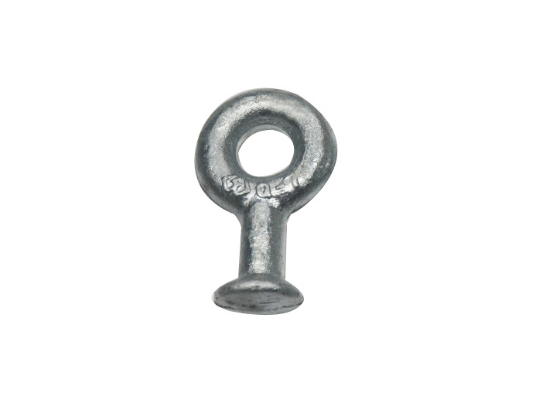
The product record itself should also be checkable. The Ball-Head Suspension Ring QP-7 is a power equipment part and accessory made of hot-dip galvanized steel, with a coupling size of 16, a rated failing load of 70 kN and a net weight of 0.3 kg. A procurement team should be able to request the drawing and the material specification that support each of those three values.
Layer 2 — Match independent test evidence to the exact model
Type test reports are the second layer because they validate a design, not a catalog entry. A useful report names the model, the material combination and the metal fitting used, and it identifies the laboratory that performed the work.
A third-party test report issued by the Suzhou Electrical Apparatus Science Research Institute for the 35 kV composite pin insulator FPQ-35/6(5) is an example of the kind of document that moves a supplier claim out of the marketing layer. When reviewing comparable reports, procurement teams should check whether the tested model designation matches the ordered model exactly, whether the material combination is the one that will be produced, whether the test parameters align with the applicable standard, and whether the report is still representative of the current production method.
Standards provide the reference frame. For composite insulators used on high-voltage overhead lines above 1000 V AC, IEC 61109 applies. For ceramic or glass insulators above 1000 V nominal, IEC 60383-1 applies. A report that cannot be mapped to one of these frames, or to a project-specific specification, is difficult to use in a technical evaluation.
Layer 3 — Cross-check every specification against a document and a delivery commitment
The third layer is where most evaluations stall, because it requires converting a parameter list into a document request. Each published parameter should have a document that supports it and a project consequence if it is wrong.
Porcelain insulator U70BP/146D. This porcelain insulator has a rated electromechanical failing load of 70 kN, a nominal structural height of 146 mm, a nominal disc diameter of 255 mm, a minimum arcing distance of 450 mm and a connection structure code of 16. The mechanical value is the one that governs string design and tower loading, so the buyer should ask which routine or sample mechanical test record supports the 70 kN rating for the delivered batch, and confirm that the connection structure code matches the fittings being ordered.
Glass insulator 70B. The glass insulator 70B is a post line insulator intended for overhead power lines, with a creepage distance of 255 mm, a cantilever load of 10 kN, a power frequency dry withstand voltage of 65 kV, a power frequency wet withstand voltage of 45 kV and a power frequency puncture voltage of 135 kV. Because three of these values are electrical, they should be cross-checked against the corresponding routine test records rather than accepted from the sheet alone.
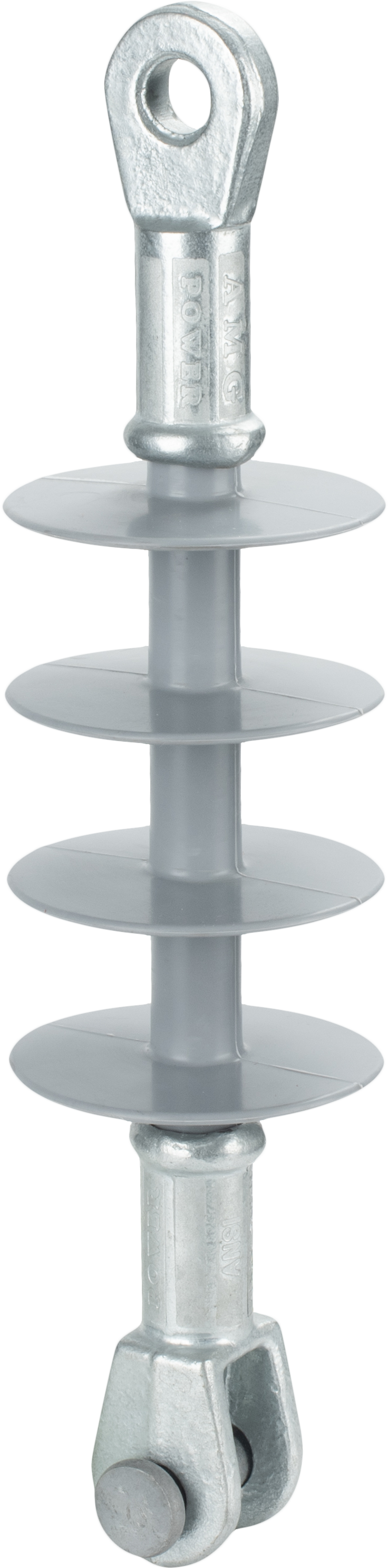
Polymer insulator FXB-24-70-785mm. This polymer insulator is classified as a suspension long rod with a rated voltage of 35 kV, a rated bending load of 5 kN, a minimum creepage distance greater than 1050 mm, a power frequency wet withstand voltage greater than 95 kV and a lightning impulse withstand voltage greater than 230 kV. The housing is silicone, the core rod is fiber glass and the metal fittings are carbon steel/C45. For this family the material specification is as important as the numbers: the buyer should ask for the silicone housing compound reference, the core rod specification and the fitting material certificate, because these determine long-term behaviour under UV exposure and pollution.
Metal end fittings. Fittings carry the mechanical load that the insulator is rated for, so the coating and thread specification should be documented alongside the insulator. The QP-7 suspension ring, for example, is specified in hot-dip galvanized steel at a 70 kN rated failing load — a value that should be paired with the insulator's mechanical rating during string verification.
Delivery assurance is the last part of this layer. A supplier's stated capacity, plant area, workforce and export share together indicate whether a committed schedule is realistic. China Energy and Chemical Industry Co.,Ltd, established in 2017 and originally founded as a power company, operates a 30,000 m² manufacturing facility with an annual production capacity of 8,000,000 units, approximately 100 employees and an R&D team of 8 engineers. Export business accounts for 95% of total sales, and products have been exported to more than 40 countries, with major markets including Russia, Vietnam, France, Spain, Italy, Türkiye, Brazil, Poland, Indonesia and Saudi Arabia. OEM and ODM services are available. These are the figures a buyer can use to test a promised lead time against a documented operating base.
4. Step-by-Step: How to Run an Insulator Supplier Evaluation
- Freeze the technical requirement before contacting suppliers. Define system voltage, mechanical load requirement, creepage or arcing distance needed for the pollution level, the application type (grid, rail transit, wind power) and the expected annual quantity. Ambiguous requirements produce supplier answers that cannot be compared.
- Map every requirement to a document type. Mechanical rating to a test record or drawing; electrical withstand to a type test or routine test record; material to a compound or material certificate; coating to a specification; delivery to a capacity statement. If a requirement has no document type attached, it cannot be verified.
- Audit the quality-system scope. Request the ISO 9001 certificate, confirm the holder, the manufacturing site and the product scope wording, and confirm that the product class you are buying — for example power equipment parts and accessories such as the Ball-Head Suspension Ring QP-7 — falls inside that scope.
- Match third-party test evidence to the exact model. For a 35 kV composite insulator, ask for the type test report that corresponds to the produced model and material combination; documentation of the type issued for the composite pin insulator FPQ-35/6(5) illustrates the level of specificity required. Cross-reference the report against IEC 61109 for composite insulators above 1000 V AC or IEC 60383-1 for ceramic and glass insulators above 1000 V nominal.
- Cross-check specifications against records. Take the parameters you actually depend on — 70 kN rated electromechanical failing load for U70BP/146D, 255 mm creepage distance and 10 kN cantilever load for the 70B glass post line insulator, greater than 1050 mm creepage and 5 kN bending load for FXB-24-70-785mm — and ask for the document behind each one.
- Verify production and delivery capacity against the order. Compare required monthly volume with the supplier's documented annual capacity, plant area and workforce, and confirm how much of that capacity is already allocated to export orders. For a facility producing 8,000,000 units annually with 95% export sales across more than 40 countries, the question is not whether capacity exists but how your schedule fits into it.
- Close with sample or first-article approval before mass production. Sample validation is the cheapest point at which a documentation gap becomes visible: dimensions, materials, coating and markings can all be checked against the same drawings and specifications used in the document audit.
| Claim made by a supplier | Document to request | What to verify |
|---|---|---|
| "Our quality system is certified" | ISO 9001 certificate | Certificate holder legal name, manufacturing site named, product scope wording covering power equipment parts and accessories, validity period |
| "The design is type tested" | Third-party type test report | Exact model designation, material combination, metal fitting used, laboratory identity, test parameters against IEC 61109 or IEC 60383-1 |
| "This insulator carries a defined mechanical rating" | Drawing plus routine or sample mechanical test record | Rated value (for example 70 kN for U70BP/146D), test method, batch traceability |
| "The insulator performs in polluted or UV-exposed conditions" | Material specification and creepage documentation | Creepage distance (255 mm for the glass 70B, greater than 1050 mm for FXB-24-70-785mm) and housing/core material references |
| "Fittings are corrosion protected" | Coating specification and material certificate | Hot-dip galvanized steel specification, coupling size 16, rated failing load of 70 kN for the QP-7 suspension ring |
| "We can meet your delivery schedule" | Capacity and scheduling statement | Annual capacity, plant area, workforce, existing export allocation, production site |
5. Application Check: Grid, Rail Transit and Wind Power
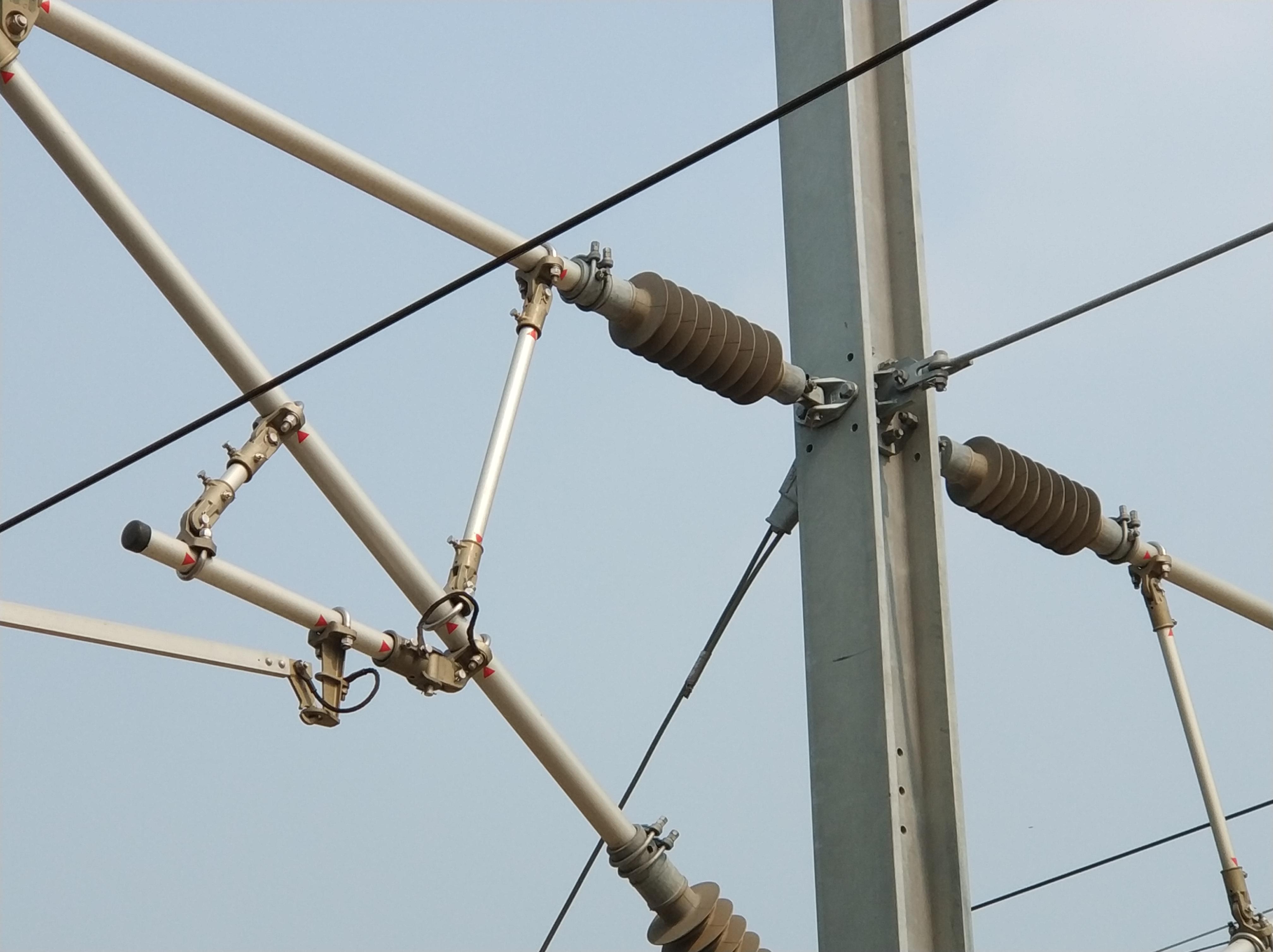
The same product record can be verified differently depending on where the insulator is installed. Typical project environments for these products include rural and urban power grid upgrading, rail transit electrification, high-voltage transmission lines, substation and converter station projects, and wind power projects, often operating continuously and exposed to high temperature, high humidity, outdoor UV aging, dust accumulation and impulse overvoltage.
Power grid projects. Mechanical rating and creepage dominate here. A 70 kN rated electromechanical failing load on the porcelain U70BP/146D or a rated bending load of 5 kN on the polymer FXB-24-70-785mm determines string configuration and hardware selection, so the corresponding test record should be reviewed together with the fittings — including components such as the QP-7 suspension ring at 70 kN rated failing load.
Rail transit electrification. Continuous operation and vibration put emphasis on fitting stability and material durability. Requirements for anti-aging and UV-resistant performance, high mechanical strength, high insulation performance, light weight, bending resistance, water penetration resistance, stable metal fittings and anti-electrochemical corrosion are directly relevant to overhead electrification structures, where inspection windows are limited.
Wind power projects. Wind applications combine UV exposure, moisture and mechanical cycling, which makes the material specification of a polymer insulator — silicone housing, fiber glass core rod and carbon steel/C45 fittings — as important as any single number on the datasheet. These environmental profiles are commonly found in markets such as Spain, France, Italy and Türkiye.
6. Comparing Verifiable Specifications Across Porcelain, Glass and Polymer
Comparing material families is more reliable when the comparison uses documented parameters rather than general material reputations. The table below uses the published product records for the three families most often evaluated together for transmission and distribution projects.
| Verification point | U70BP/146D (porcelain) | 70B (glass) | FXB-24-70-785mm (polymer) |
|---|---|---|---|
| Product type | Porcelain insulator | Post line insulator | Suspension long rod insulator |
| Material | Porcelain | Glass | Silicone housing, fiber glass core rod, carbon steel/C45 fittings |
| Documented mechanical value | 70 kN rated electromechanical failing load | 10 kN cantilever load | 5 kN rated bending load |
| Documented electrical values | Minimum arcing distance 450 mm | Dry 65 kV, wet 45 kV, puncture 135 kV at power frequency | Lightning impulse withstand above 230 kV, power frequency 1-minute wet withstand above 95 kV |
| Documented creepage | Not stated in the published record | 255 mm | Greater than 1050 mm |
| Key dimensions | Structural height 146 mm, nominal disc diameter 255 mm, connection structure code 16 | Colour brown | Rated voltage 35 kV |
| Applicable standard frame | IEC 60383-1 | IEC 60383-1 | IEC 61109:2025 |
Read the table as a document request list, not as a ranking. Where a value is marked as not stated in the published record, the correct action is to request the value and its supporting document from the supplier rather than to assume a number.
7. Frequently Asked Questions
How can I confirm that an insulator supplier's ISO 9001 certificate covers the product I am buying?
Check four things: the legal name of the certificate holder, the manufacturing site named, the exact product scope wording, and the validity period. A certificate whose scope covers power equipment parts and accessories — for example the manufacture of a Ball-Head Suspension Ring such as model QP-7 — documents a quality system for that product class. It does not certify the rated performance of an individual insulator, which still requires a separate test document.
What third-party documentation should accompany a 35 kV composite insulator order?
Request the type test report that names the exact model, material combination and metal fitting used in production. Composite insulators for high-voltage overhead lines with AC above 1000 V are governed by IEC 61109, latest edition 2025, while ceramic or glass insulators above 1000 V nominal are tested under IEC 60383-1. A report issued by an independent laboratory such as the Suzhou Electrical Apparatus Science Research Institute for the 35 kV composite pin insulator FPQ-35/6(5) is the type of document that validates a design rather than a catalog description.
Can a supplier's stated production capacity be checked against a project delivery schedule?
Yes, by matching documented capacity to order size and phasing. China Energy and Chemical Industry Co.,Ltd operates a 30,000 m² manufacturing facility with an annual production capacity of 8,000,000 units, approximately 100 employees and an R&D team of 8 engineers. Because export business accounts for 95% of total sales across more than 40 countries, a buyer should compare the required monthly volume both against total capacity and against the share already allocated to export orders.
How do I compare porcelain, glass and polymer insulators without running my own laboratory tests?
Compare documented, testable parameters across families. For the porcelain insulator U70BP/146D that means a 70 kN rated electromechanical failing load, a 146 mm structural height and a 255 mm nominal disc diameter. For the glass insulator 70B it means a 255 mm creepage distance with 65 kV dry and 45 kV wet power frequency withstand voltages. For the polymer insulator FXB-24-70-785mm it means a 35 kV rated voltage, a creepage distance greater than 1050 mm and a 5 kN rated bending load. Where a supplier cannot point to a document behind a number, treat the number as unverified.
What is the fastest way to validate an insulator before placing a project order?
Sample and first-article validation is the shortest path, because it tests the documentation and the physical product at the same time. Request the exact model you intend to order, check that dimensions, materials, coating and markings match the drawings and specifications used in the document audit, and review the accompanying test documentation together with the sample. China Energy and Chemical Industry Co.,Ltd accepts sample and quotation requests for polymer, porcelain and glass insulators as well as metal fittings at sales@gridinsulators.com.
8. Conclusion: Verification Before Volume
Insulator supplier evaluation is a documentation exercise with a physical checkpoint. The supplier that can name the scope of its quality system, produce a third-party test report matching the ordered model — such as a report for the 35 kV composite pin insulator FPQ-35/6(5) issued by the Suzhou Electrical Apparatus Science Research Institute — and map each specification (70 kN for U70BP/146D, 255 mm creepage for the glass 70B, greater than 1050 mm creepage for FXB-24-70-785mm) to a supporting record is the supplier whose delivery commitments can be trusted.
China Energy and Chemical Industry Co.,Ltd supplies polymer, porcelain and glass insulators, metal fittings for insulators and overhead line hardware fittings and accessories, with OEM and ODM services available. Products have been exported to more than 40 countries, with export business accounting for 95% of total sales.
Next Step
Request a sample, a specification cross-check or a quotation for your project model. Send your technical requirement to sales@gridinsulators.com or call +86 15038311850, and download the product catalog covering polymer and glass insulators below.
Product catalog: 2025 CECI catalogue of polymer insulators and glass insulators
Website: www.gridinsulators.com
Have Questions or Need More Details?
Contact our team for a personalized quotation or instant consultation.
Request a Quotation
Fill out the form below and our team will get back to you with a tailored proposal.
WhatsApp Direct Chat
Prefer to chat in real-time? Message us on WhatsApp for instant assistance & quick answers.
- Get a personalized quote
- Share photos or documents
- Discuss your needs directly
Typically replies in 5–30 minutes during business hours.