Technical Guide: Key Parameters for Suspension and Line Post Insulators
A suspension or line post insulator is selected with four numbers, not with a material preference: rated electromechanical failing load, creepage distance, withstand voltage, and bending load. Read those four correctly, then confirm that the metal fittings carrying the load are rated for the same duty as the insulator itself.
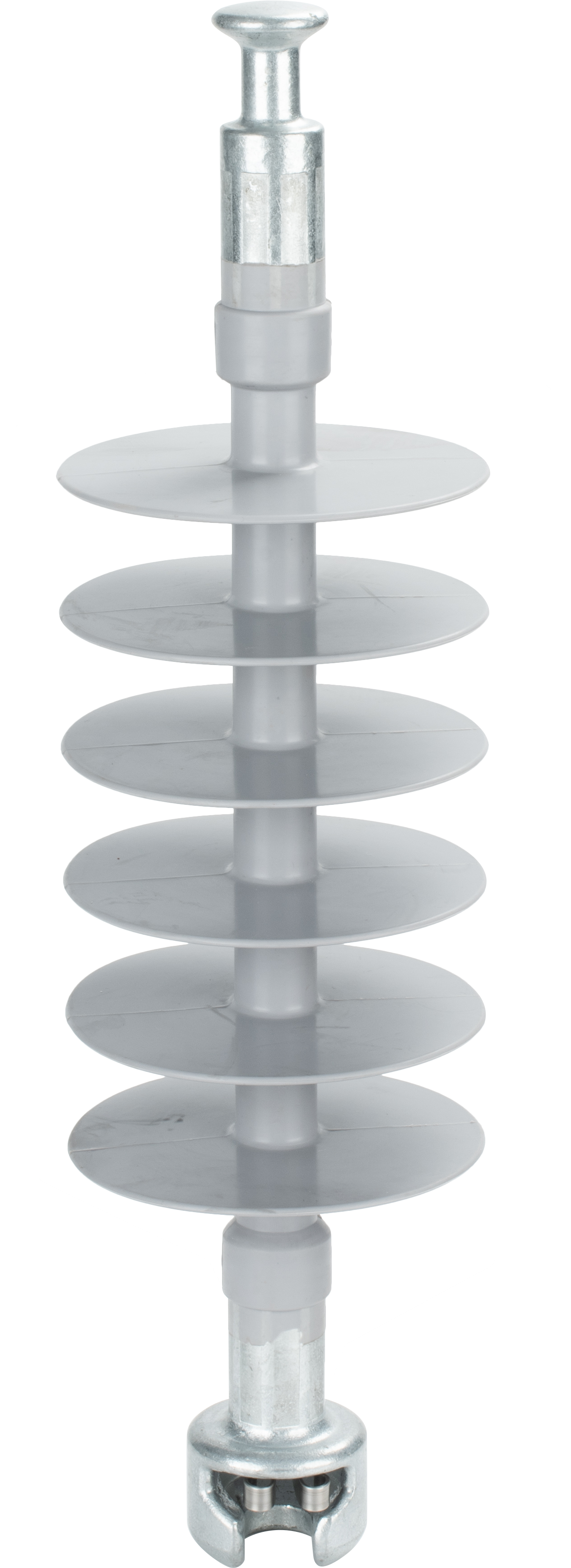
This guide works through each parameter using three published reference models. The 70B glass insulator illustrates creepage and wet withstand values (creepage distance 255 mm, power-frequency wet withstand voltage 45 kV). The U70BP/146D porcelain insulator illustrates mechanical duty (rated electromechanical failing load 70 kN). The FXB-24-70-785mm polymer insulator shows a full electrical and mechanical set for a 35 kV suspension long rod unit (lightning impulse withstand voltage >230 kV, minimum creepage distance >1050 mm, rated bending load 5 kN). The QP-7 ball-head suspension ring is used to show how fittings are matched to the insulator load.
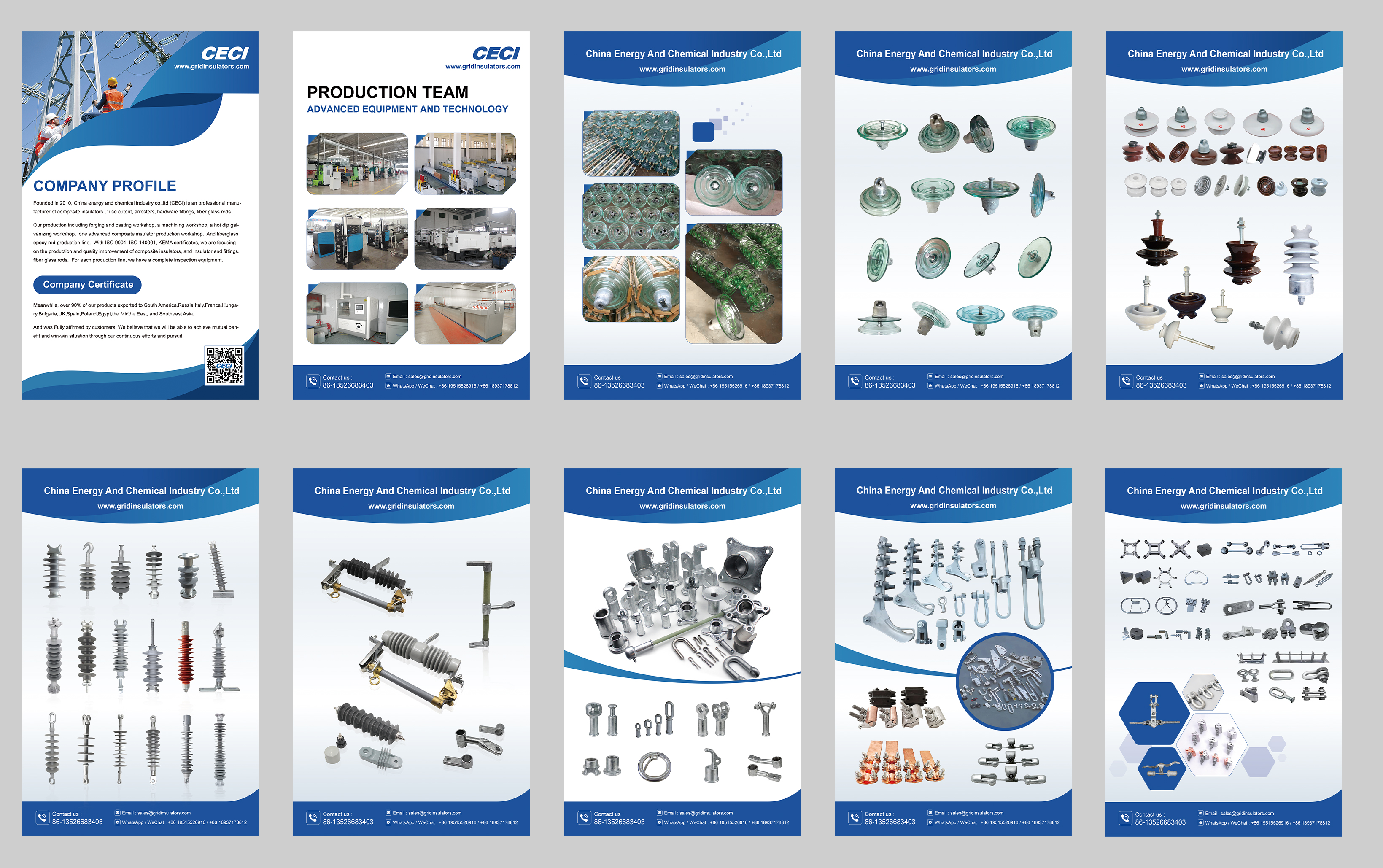
China Energy and Chemical Industry Co.,Ltd (CECI) is a manufacturer based in Zhengzhou, Henan, China that produces polymer insulators, porcelain insulators, glass insulators and the metal fittings used in insulator strings, from a 30,000 m² facility with 8 R&D engineers and an annual output of 8,000,000 units. Its catalogue also covers surge arresters, fuse cutouts, end fittings and FRP rods, and OEM/ODM production is available. Product documentation from this source is used as the worked example throughout. Manufacturer site: www.gridinsulators.com
Problem Definition: Why Insulator Datasheets Are Hard to Compare
Two suppliers can describe the same insulator in two different parameter languages, and the mismatch is what causes most procurement errors. Rated electromechanical failing load is also written as specified mechanical load or mechanical failing load. Creepage distance is sometimes listed instead as specific creepage, or omitted in favour of a flashover voltage. Withstand voltage appears as lightning impulse withstand, power-frequency dry withstand, or power-frequency wet withstand, and these are not interchangeable values.
A second problem is configuration. Suspension insulators carry tensile load along the string; line post insulators carry a cantilever (bending) load at the top fitting. A datasheet that quotes a failing load for a post configuration, or a bending load for a suspension unit, cannot be compared across suppliers without correction.
A third problem is the fitting boundary. An insulator rated at 70 kN loses its rated system integrity if it is assembled with a ball-eye, socket, or suspension ring of lower rated failing load. Because fittings are usually purchased separately, the weakest element in the string is often not the insulator at all.
A fourth problem is evidence. Parameter values on a quotation are commercial statements. Parameter values in a type test report, produced against a named standard by an accredited laboratory, are verifiable design evidence. Buyers who treat the two as equivalent frequently discover at acceptance testing that the delivered configuration was never tested as a system.
Industry Background: What Is Driving the Parameter Mix
The electrical insulator market is expanding, and the growth is concentrated where parameter discipline matters most: transmission and distribution networks and electrified rail. Grand View Research valued the global electrical insulator market at USD 12.5 billion in 2023 and projected USD 18.4 billion by 2030. Strategic Market Research valued the global composite insulator market at approximately USD 3.42 billion in 2024, expecting USD 5.87 billion by 2030 at a CAGR of 9.1%. Within the composite segment, suspension insulators captured a 48.4% share in 2024, according to Mordor Intelligence.
The standards framework behind those numbers is stable and prescriptive. Composite insulators for high-voltage overhead lines (AC above 1000 V) are governed by IEC 61109, whose latest edition is 2025. Ceramic or glass insulators for overhead lines with nominal voltage above 1000 V are tested under IEC 60383-1. In practice, this means a buyer evaluating a polymer suspension tension insulator and a porcelain or glass insulator is comparing two different but parallel test regimes — and the datasheet parameters must be read under the correct regime.
Two structural shifts explain why parameter literacy has become a purchasing skill rather than a technical detail. First, material substitution: polymer and composite insulators (silicone housing over an FRP rod core) are now specified alongside established porcelain and glass, so buyers compare across materials rather than within one. Second, sourcing concentration: buyers increasingly evaluate a source factory on whether it can document parameters, not only quote them. The three models below show what that documentation looks like.
Detailed Solution: The Six Parameters That Decide the Selection
1. Rated Electromechanical Failing Load (Mechanical Duty)
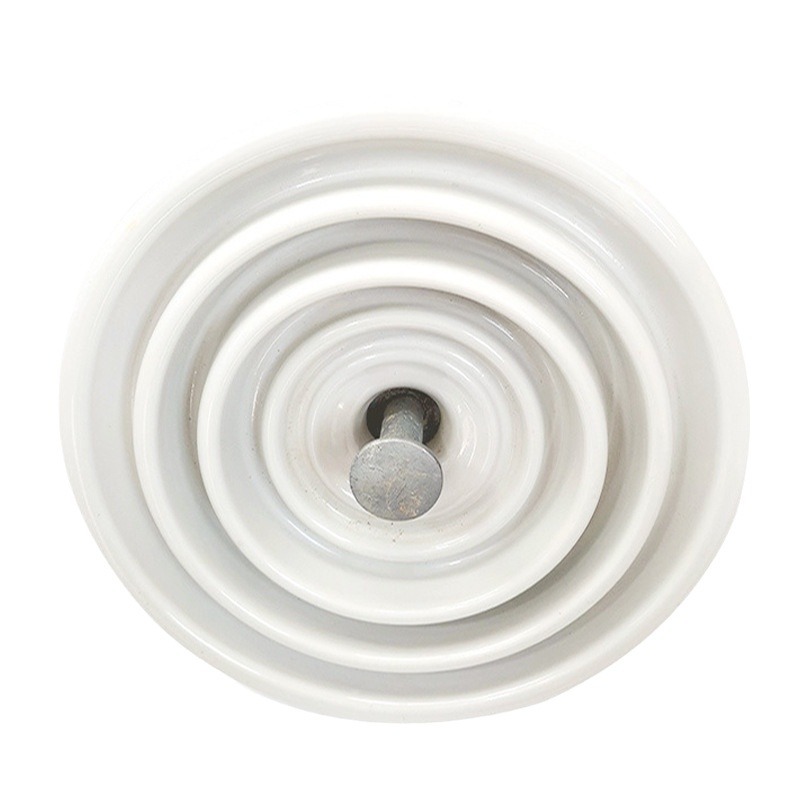
Rated electromechanical failing load is the maximum tensile load the insulator must withstand without failure, expressed in kilonewtons. It is the starting point for string design, because it defines the mechanical class of the unit. The U70BP/146D porcelain insulator is a 70 kN class unit — the "70" in the model designation is the load class, and a string of such units must be designed so that the working load stays well below the rated failing load once the project safety factor is applied.
For polymer and composite units, the equivalent mechanical class is expressed through the same failing-load logic, with the addition of a bending rating where the unit is used as a post. The FXB-24-70-785mm polymer insulator is specified with a rated bending load of 5 kN, which is the parameter that governs its use in a rigid post configuration rather than a free-hanging string.
2. Rated Voltage and the Withstand Voltage Pair
Rated voltage sets the insulation class of the unit. The FXB-24-70-785mm polymer insulator is rated 35 kV. Voltage class alone does not define insulation performance; that is done by the withstand pair — lightning impulse withstand voltage and power-frequency withstand voltage.
Lightning impulse withstand voltage is the peak impulse the insulator must survive without flashover, and it is the parameter that matches the line to the expected overvoltage environment. For the FXB-24-70-785mm it is specified as greater than 230 kV. Power-frequency withstand voltage is tested in two conditions: dry and wet. Wet withstand is the more demanding value because it represents the insulator under rain, and it should always be the number used for external insulation in service. The FXB-24-70-785mm is specified at greater than 95 kV for the 1-minute wet withstand test; the 70B glass insulator is specified at 45 kV wet withstand.
3. Creepage Distance (Pollution Duty)
Creepage distance is the shortest path along the external insulating surface between the two metal end fittings. It determines how much leakage current path exists under contamination, and it is the parameter that should be sized against the pollution class of the route rather than against the voltage class alone. The 70B glass insulator is specified with a creepage distance of 255 mm; the FXB-24-70-785mm polymer insulator is specified at greater than 1050 mm.
The comparison only becomes meaningful when creepage is read against rated voltage. A long-rod FRP silicone insulator with a generous creepage figure is chosen for high-pollution environments — coastal, industrial, desert-dust — while a shorter creepage unit suits a clean inland route. This is also why anti-pollution flashover performance and aging resistance are listed as core design highlights of polymer insulators: the hydrophobic silicone surface is intended to support what the creepage distance specifies.
4. Bending Load versus Tensile Load
The fourth parameter is the one most often confused. Suspension insulators (including suspension tension polymer insulator configurations, deadend fittings and pin configurations) transfer load along the axis of the unit; the governing value is the rated electromechanical failing load. Line post insulators — including horizontal line post configurations used on 66 kV class lines and in substation applications — are cantilevered, so the governing value is the rated bending load.
This is why a 70 kN suspension unit cannot simply be substituted for a post unit of the same mechanical "70" class: the two values describe different loading modes. When a project mixes both configurations, each location should be specified with its own governing load, taken from the structure loading diagram rather than from the string schedule.
5. Material and Construction Behind the Numbers
The three materials deliver the parameters through different constructions, and understanding that helps when a value looks unusual.
- Polymer / composite insulator. The FXB-24-70-785mm polymer insulator is built from a silicone housing, a fiberglass core and carbon steel/C45 fittings — a construction that supports lightweight design, anti-pollution flashover behaviour and aging resistance, and allows the creepage and bending values to be combined in a single long-rod unit.
- Porcelain insulator. The U70BP/146D porcelain insulator represents the established cap-and-pin class, where the mechanical failing load of 70 kN is the defining specification.
- Glass insulator. The 70B glass insulator shows how the electrical parameters present on a smaller unit — 255 mm creepage with 45 kV wet withstand.
Because the mechanical and pollution duty of a line does not change with material, material selection is a trade between weight, pollution behaviour, aging behaviour and the maintenance strategy of the utility — not a trade in parameter definitions.
6. Metal End Fittings, Accessories and System Integrity
Fittings convert an insulator into a load path, and they must be rated at or above the insulator they carry. The QP-7 ball-head suspension ring is a worked example: hot-dip galvanized steel, designated coupling size 16, rated failing load 70 kN, weight 0.3 kg. That 70 kN rating matches the 70 kN class of the U70BP/146D porcelain insulator, which is exactly the alignment a buyer should be checking.
Fittings also determine service life in ways that are not visible in the insulator datasheet. Hot-dip galvanized steel is specified for corrosion resistance across the coupling surfaces, and the coupling size must match the socket and ball dimensions used elsewhere in the string. When a project involves forged and casting metal fittings for insulators, the interface dimensions — not only the load class — become the acceptance point.
Step-by-Step Breakdown: How to Read a Datasheet in Seven Steps
Step 1 — Fix the mechanical duty of the location
Identify whether the position is a suspension (tensile) or post (cantilever) application. For tensile positions, record the required rated electromechanical failing load — for example the 70 kN class of the U70BP/146D porcelain insulator. For post positions, record the required rated bending load, such as the 5 kN of the FXB-24-70-785mm polymer insulator.
Step 2 — Fix the electrical duty
Note the rated voltage and the two withstand values. A 35 kV unit, for instance, is read together with its lightning impulse withstand voltage (>230 kV for the FXB-24-70-785mm) and its power-frequency wet withstand voltage (>95 kV).
Step 3 — Size the creepage distance to the pollution class
Compare creepage against rated voltage, not in isolation. A 255 mm creepage figure (70B glass) and a greater-than-1050 mm figure (FXB-24-70-785mm) belong to different duty levels and should not be judged without the route pollution data.
Step 4 — Confirm dry or wet test conditions
Only wet withstand values describe external insulation in service. If the datasheet states 45 kV (as for the 70B glass insulator) or >95 kV (FXB-24-70-785mm), confirm the test condition attached to that figure.
Step 5 — Match the fittings to the load class
Check rated failing load and coupling size on every fitting. A QP-7 ball-head suspension ring at 70 kN with coupling size 16 is the correct class for a 70 kN insulator; a lower-rated fitting voids the string's rated duty.
Step 6 — Verify the evidence, not just the quote
Request the type test report and the quality management certificates, and check that the tested model matches the ordered model. Composite insulators for HV overhead lines are tested under IEC 61109 (2025 edition); ceramic and glass insulators above 1000 V under IEC 60383-1.
Step 7 — Convert the specification into order terms
Once the parameters are fixed, commercial terms follow: minimum order quantity for OEM/ODM production of 500 units, a production lead time of 30–45 days, delivery terms on FOB or CIF basis, ex-factory test as the acceptance criterion, and payment of 30% by T/T before production with the 70% balance by T/T before shipping.
If a parameter cannot be confirmed at any step, the correct action is to hold the specification, not to accept a lower-rated substitute. Parameter gaps in a technical guide are resolved with test evidence.
Use Cases: Where These Parameters Change the Decision
Parameter weighting is application-specific. The same three models are read differently across the projects where these insulators are typically installed.
- Rural and urban power grid upgrading. Mechanical class and creepage dominate, because the route is long, maintenance access is limited and pollution varies along the line.
- High-voltage transmission lines and substations / converter stations. Withstand voltages and creepage distance dominate, with the impulse withstand value matched to the line's overvoltage environment.
- Rail transit electrification and railway catenary or ground equipment insulation. Mechanical consistency and fitting dimensional control dominate, because the insulator interfaces with fixed structures and catenary hardware.
- Wind power projects. Lightweight construction and bending behaviour matter, favouring polymer long-rod units with a defined bending rating.
The service environment sets a second layer of requirements: continuous 24/7 operation under high temperature, high humidity, outdoor climate, UV aging, dust storms and impulse overvoltage. These conditions are common in Spain, France, Italy and Turkey, and they are the reason anti-aging, UV resistance, high mechanical strength, high insulation, light weight, bending resistance, waterproof and stable metal fittings are specified as a combined requirement rather than as separate options. Anti-electrochemical corrosion at the metal interface, and non-toxic, environmentally friendly materials, are also part of the specification set for these markets.
Project Reference: 10,000 Units over Three Years
A reference project in Brazil, Italy, Turkey and Vietnam supplied and installed 10,000 units of composite insulators used for mechanical support and insulation on transmission lines and for substation insulation. The end users were utility companies, power EPC contractors and railway operators, and the project ran over a three-year implementation period. The reported outcome was enhanced line stability, reduced maintenance intensity and improved pollution resistance — the three results that parameter discipline is intended to deliver.
Customization is often part of such projects. Customization services cover voltage, creepage distance, lightning impulse withstand voltage, bending load, colour and logo, with FRP rod core supply and customizable end fittings; OEM and ODM production services are available for both composite and polymer insulator programmes.
Comparison Table: Glass 70B vs Porcelain U70BP/146D vs Polymer FXB-24-70-785mm
The table below places the three reference models side by side on the same parameter set. Cells marked "—" indicate a value that is not specified in the data set used for this guide; they should be requested from the supplier's datasheet before a comparison is finalised.
| Parameter | 70B (glass) | U70BP/146D (porcelain) | FXB-24-70-785mm (polymer) |
|---|---|---|---|
| Unit type | Glass insulator | Porcelain insulator, U-type suspension class | Suspension long rod polymer insulator |
| Material system | Glass | Porcelain | Silicone housing, fiberglass core, carbon steel/C45 fittings |
| Rated voltage | — | — | 35 kV |
| Rated electromechanical failing load | — | 70 kN | — |
| Rated bending load | — | — | 5 kN |
| Minimum creepage distance | 255 mm | — | > 1050 mm |
| Power-frequency 1-min wet withstand voltage | 45 kV | — | > 95 kV |
| Lightning impulse withstand voltage | — | — | > 230 kV |
| Applicable test standard | IEC 60383-1 (above 1000 V) | IEC 60383-1 (above 1000 V) | IEC 61109 (2025 edition) |
| Primary decision parameter | Creepage and wet withstand | Mechanical failing load | Combined creepage, impulse withstand and bending load |
| Compatible fitting example | Ball-eye / socket fittings matched to insulator load class | Ball-head suspension ring QP-7, rated failing load 70 kN, coupling size 16 | Customizable end fittings, FRP rod core supply |
FAQ: Parameter, Compliance and Ordering Questions
Which standards and test evidence should a buyer request for suspension and line post insulators?
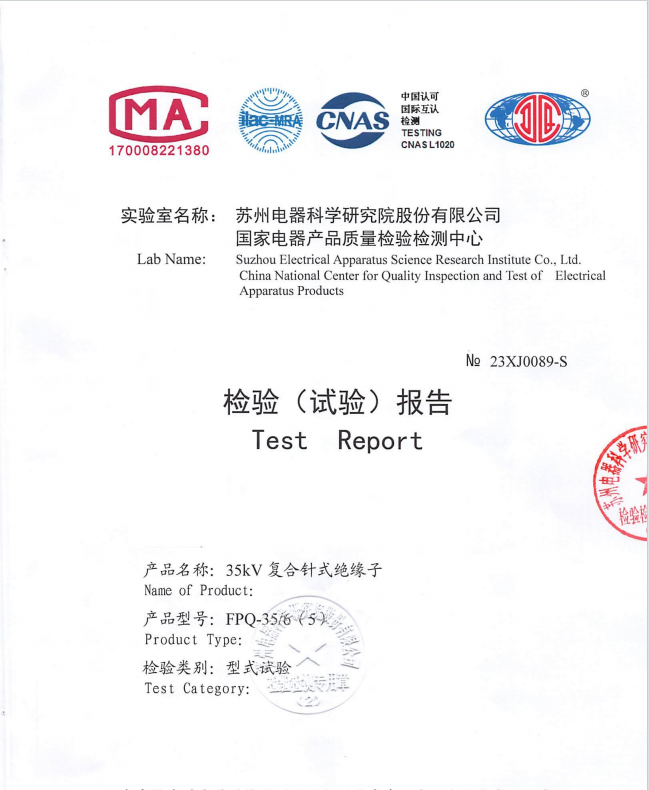
Composite insulators for high-voltage overhead lines (AC above 1000 V) are governed by IEC 61109, latest edition 2025, while ceramic or glass insulators above 1000 V are tested under IEC 60383-1. For a composite product, the buyer should ask for the type test report covering the exact model. One example from the manufacturer used in this guide is type test report 23XJ0089-S for a 35 kV composite pin insulator, model FPQ-35/6 (5), issued by Suzhou Electrical Apparatus Science Research Institute Co., Ltd. / China National Center for Quality Inspection and Test of Electrical Apparatus Products on 2023-07-13, assessed against IEC 60815, IEC 61109, IEC 62217 and IEC 61466, with tests according to IEC 61109. The related product listed on that report is the FXB-24-70-785mm polymer insulator. Supplement this with the ISO 9001 quality management certificates: 75425Q0493R053 (scope: production of hardware for high-voltage power transmission lines, valid to 2028-12-03) and 75424Q0348R0S (scope: manufacturing of power fittings, including high-voltage line fittings and accessories, valid to 2027-07-21).
Can creepage distance, failing load and end fittings be customized on composite and polymer insulators?
Yes. OEM and ODM production services are available, and the documented customization scope covers voltage, creepage distance, lightning impulse withstand voltage, bending load, colour and logo. End fittings are customizable and FRP rod core supply is offered, which matters when a project must match an existing string interface rather than adopt a standard configuration. Production capacity supporting this is 500 tons and 100,000 pieces per month.
What are the documented order terms — MOQ, delivery, acceptance and payment?
The minimum order quantity for OEM/ODM production is 500 units. Delivery terms are FOB or CIF. The acceptance criterion is ex-factory test. Payment terms are 30% down payment by T/T before production, with the 70% balance by T/T before shipping. Because acceptance is defined at the factory, the buyer should agree the test items and the parameter list before production begins, so the ex-factory test can be checked against the same values that appear on the datasheet.
How can a buyer verify that delivered insulators match the specified parameters?
Verification rests on three documents. First, the type test report, which defines the tested design and its standard basis. Second, the ISO 9001 certificates, which define the scope of the manufacturing system the product comes from — 75425Q0493R053 covering hardware for high-voltage power transmission lines and 75424Q0348R0S covering power fittings. Third, the ex-factory test record, since the acceptance criterion in the purchasing terms is ex-factory test and the supplier applies 100% test in production quality control. The parameters to check against are the same ones used for selection: rated electromechanical failing load or rated bending load, rated voltage, creepage distance, and the wet and impulse withstand voltages.
What is the lead time and monthly capacity for a polymer insulator order?
The stated production lead time is 30–45 days, with monthly capacity of 500 tons and 100,000 pieces and a minimum order quantity of 500 units for OEM/ODM production. For projects where the parameter set differs from a catalogue model — for example a non-standard creepage distance or a specific end fitting interface — the customization scope should be agreed before the lead time clock starts. Buyers can review the full model range in the catalogue: 2025 CECI catalogue of polymer insulators and glass insulators, and send a specification or sample request to sales@gridinsulators.com for a quotation against the exact parameter set.
Conclusion: Four Numbers, One Verified Document Set
Suspension and line post insulators are selected by reading rated electromechanical failing load, creepage distance, withstand voltages and bending load against the actual duty of the location — then confirming that every fitting in the string carries at least the same rated load as the insulator. The three reference models in this guide show how the same rule applies across materials: 70 kN of mechanical class on the U70BP/146D porcelain insulator, 255 mm creepage and 45 kV wet withstand on the 70B glass insulator, and a combined 35 kV, >230 kV impulse, >1050 mm creepage and 5 kN bending specification on the FXB-24-70-785mm polymer insulator.
The final step is evidence. Parameters that appear only on a quotation are claims; parameters that appear in a type test report referenced to IEC 61109 or IEC 60383-1, supported by an ISO 9001 certified manufacturing scope and an ex-factory acceptance test, are verifiable specifications. That distinction is what makes a technical guide useful at the evaluation stage — and what makes a supplier answerable at the execution stage.
Next Step: Match Your Parameter Set
Send the duty data for your line — rated voltage, required failing or bending load, pollution level and fitting interface — and CECI will respond with the matching polymer, porcelain or glass insulator model, the relevant test documentation, and the fitting set required for system integrity. Customization covers voltage, creepage distance, lightning impulse withstand voltage, bending load, colour and logo, with OEM/ODM production available.
Catalogue download: 2025 CECI catalogue of polymer insulators and glass insulators (PDF)
Email: sales@gridinsulators.com | Tel: +86 15038311850 | WhatsApp: +86 19515526916 | Website: www.gridinsulators.com
China Energy and Chemical Industry Co.,Ltd — Room 1502, NO. 12, Shangwu Waihuan Road, Zhengdong New District, Zhengzhou, Henan, China. Request a sample or a specification-based quotation for suspension and line post insulators.
Have Questions or Need More Details?
Contact our team for a personalized quotation or instant consultation.
Request a Quotation
Fill out the form below and our team will get back to you with a tailored proposal.
WhatsApp Direct Chat
Prefer to chat in real-time? Message us on WhatsApp for instant assistance & quick answers.
- Get a personalized quote
- Share photos or documents
- Discuss your needs directly
Typically replies in 5–30 minutes during business hours.