Porcelain vs. Glass vs. Polymer Insulators: A Practical Comparison Guide
Porcelain vs. Glass vs. Polymer Insulators: A Practical Comparison Guide
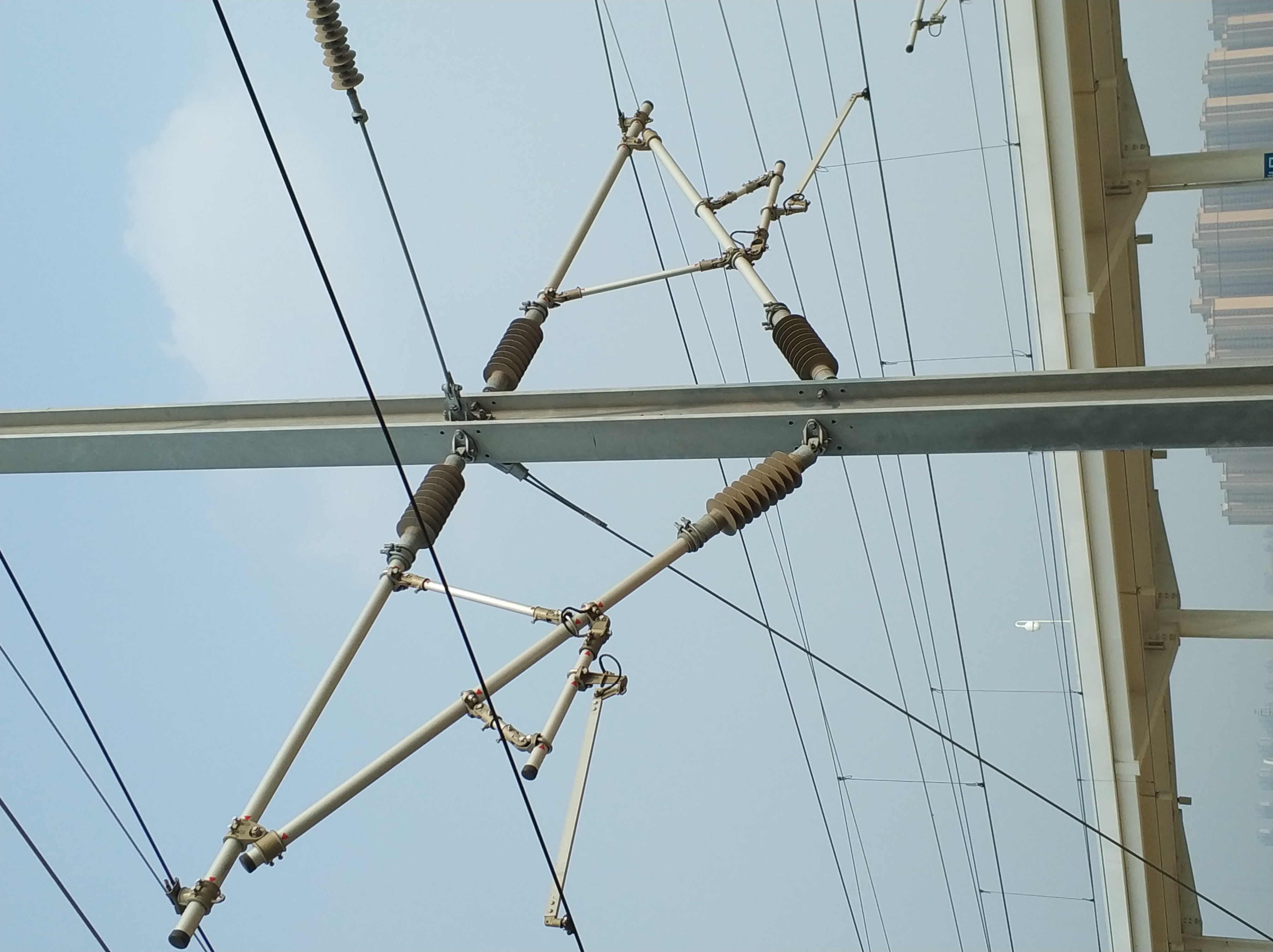
Choosing between porcelain, glass and polymer insulators is rarely about finding “the best material”. It is about matching an insulator type to a defined mechanical duty, a voltage class, a pollution level and a maintenance model. This guide compares three published catalogue models from China Energy and Chemical Industry Co.,Ltd (CECI) — the porcelain unit U70BP/146D, the glass line post 70B, and the polymer suspension long rod FXB-24-70-785mm — using their published parameters, and explains what each figure means when you are building a bill of quantities for an overhead line, a substation or a rail electrification project.
Short answer first. If your position is a suspension or tension point on a 35 kV-class line where creepage, weight and handling matter, a polymer long rod such as FXB-24-70-785mm (>1050 mm minimum creepage distance, 35 kV rated voltage, 5 kN rated bending load) is the natural candidate. If your position is a post-mounted distribution application with moderate cantilever duty, a glass line post such as 70B (10 kN cantilever load, 255 mm creepage distance, brown) fits that role. If your requirement is a disc-type suspension or tension string with a high tensile rating and a disc-level replacement strategy, a porcelain unit such as U70BP/146D (70 kN rated electromechanical failing load, 146 mm structural height, 255 mm nominal disc diameter) is the appropriate reference point. The three models are not interchangeable — they are three different insulator types — so the comparison has to start with function, not with material.
Problem Definition: why a straight “material vs. material” comparison misleads buyers
Most insulator comparisons fail for the same three reasons, and all three show up as soon as you put real catalogue data side by side.
1. The three materials are sold in different insulator types, so the mechanical parameters are not the same kind of number. U70BP/146D is a porcelain disc-type unit rated by its electromechanical failing load (70 kN). 70B is a glass line post insulator rated by cantilever load (10 kN). FXB-24-70-785mm is a polymer long rod rated by bending load (5 kN). A 70 kN tension rating, a 10 kN cantilever rating and a 5 kN bending rating describe different loading directions on different structures. Treating them as one scale is the single most common specification error in distribution and sub-transmission procurement.
2. Published catalogues are not uniformly complete, and blanks are not zeroes. The published specification for U70BP/146D gives minimum arcing distance (450 mm), connection structure code (16), structural height (146 mm), nominal disc diameter (255 mm) and rated electromechanical failing load (70 kN) — but it does not publish a creepage distance for that unit. The 70B data sheet publishes creepage distance and withstand voltages but not overall dimensions. A buyer who fills those gaps by assumption, or by copying values from a different model, creates a specification risk that only appears at type-test or commissioning stage.
3. Material is often mistaken for the pollution solution. Pollution performance is driven mainly by creepage distance, shed profile and surface behaviour in service — not by the word “polymer” or “porcelain” on a data sheet. That is why this guide compares published creepage numbers directly: 255 mm on the 70B line post and >1050 mm minimum creepage distance on the FXB-24-70-785mm long rod.
Decision rule: define the mechanical duty and the creepage requirement first. Only then let material decide the housing and the maintenance strategy. Material chosen before duty is a specification error waiting to be discovered on site.
Industry Background: standards and market direction
The regulatory frame is already split by material, which is why compliance documents matter more than brand claims during evaluation.
- Composite insulators for high-voltage overhead lines (AC above 1000 V) are governed by the international standard IEC 61109, whose latest edition is 2025.
- Ceramic and glass insulators for overhead lines with a nominal voltage above 1000 V are tested under IEC 60383-1.
A 35 kV polymer long rod and a brown glass line post therefore go through different test programmes. Comparing them on a single “certificate” line item tells you almost nothing; comparing the type-test report for the exact model, against the correct standard and edition, tells you a great deal.
Market data points in the same direction. Grand View Research values the global electrical insulator market at USD 12.5 billion in 2023, projected to reach USD 18.4 billion by 2030. Within that total, Strategic Market Research estimates the global composite insulator market at approximately USD 3.42 billion in 2024, expected to reach USD 5.87 billion by 2030 at a CAGR of 9.1%. Mordor Intelligence reports that suspension insulators captured a 48.4% share of the composite insulators market segment in 2024 — a signal that composite material is being adopted most aggressively in suspension positions rather than in every position. On the supply side, OEC data shows China concentrated 13.1% of global exports of insulating glass and related materials in 2024, acting as the second largest global exporter.
The competitive field is broad. Mordor Intelligence lists ABB Ltd, Siemens Energy, GE Grid Solutions, NGK Insulators and Hubbell Inc. among the major global players in the electric insulator market, while a large part of day-to-day project sourcing is handled by specialised manufacturing exporters. Buyers therefore end up comparing quotes that come from very different supply models — multinational product lines, specialised insulator factories, and trading intermediaries — which is exactly why parameter-level comparison, not brand-level comparison, is the safer evaluation method.
The operating conditions that drive the material decision are consistent across transmission, distribution and railway projects: outdoor 24/7 operation under high temperature, high humidity, UV aging, dust storms, wind-and-sand abrasion of shed surfaces, and impulse overvoltage events. Typical project types include rural and urban power grid upgrading, rail transit electrification, high-voltage transmission lines, substation and converter station works, and wind power projects.
Detailed Solution: what the three CECI models actually publish
CECI manufactures and exports polymer, porcelain and glass insulators together with metal end fittings, overhead line hardware and accessories, so the three models below come from one production system rather than three unrelated supply chains.
Porcelain: U70BP/146D — the disc-type reference
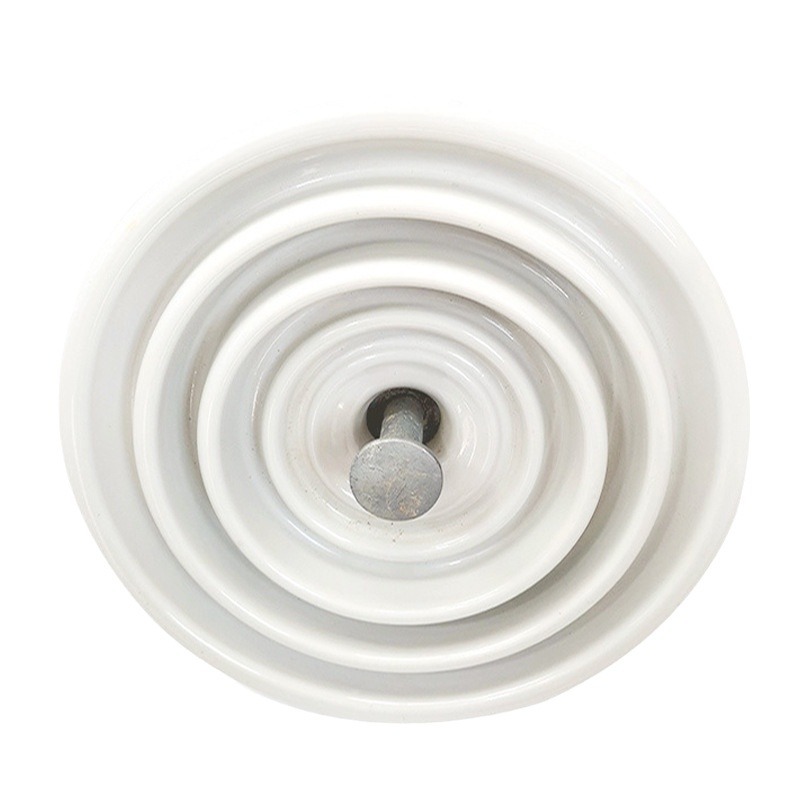
Published data for U70BP/146D: minimum arcing distance 450 mm; connection structure code 16; structural height 146 mm; nominal structural height H 146 mm; nominal disc diameter 255 mm; rated electromechanical failing load 70 kN; body material porcelain.
Read these as design inputs, not as marketing numbers. The 70 kN electromechanical failing load sets the string strength basis, so it is the figure a line engineer uses to select string configuration and safety factors. The 146 mm structural height and 255 mm disc diameter together determine how long a string becomes and therefore how much tower height and clearance the design needs. The 450 mm minimum arcing distance supports the impulse withstand behaviour of the position. Connection structure code 16 defines the coupling interface, which must match the fittings you buy with the insulator.
Glass: 70B — the line post duty
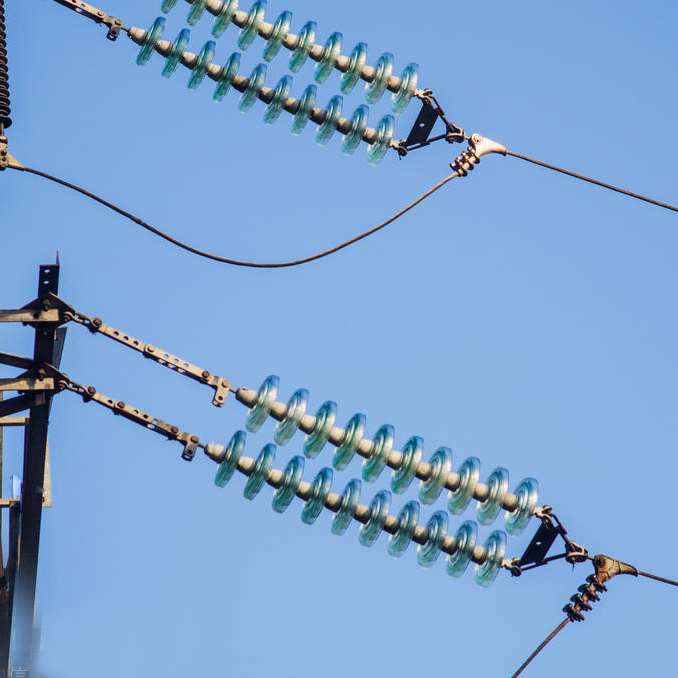
Published data for 70B: creepage distance 255 mm; cantilever load 10 kN; power frequency wet withstand voltage 45 kV; power frequency dry withstand voltage 65 kV; power frequency puncture voltage 135 kV; colour brown; body material glass; type post line.
The cantilever figure is the defining parameter here. A line post carries bending and cantilever loading on a structure, not axial tension, so its 10 kN rating cannot be read against a 70 kN suspension rating. The 135 kV puncture voltage is a material-level advantage typical of glass: puncture withstand sits well above the flashover values, which supports a “fail visible, not fail hidden” service characteristic. Creepage of 255 mm defines the pollution duty this unit is published for — it is a distribution-level post, not a heavily polluted coastal string.
Polymer: FXB-24-70-785mm — the long rod suspension option
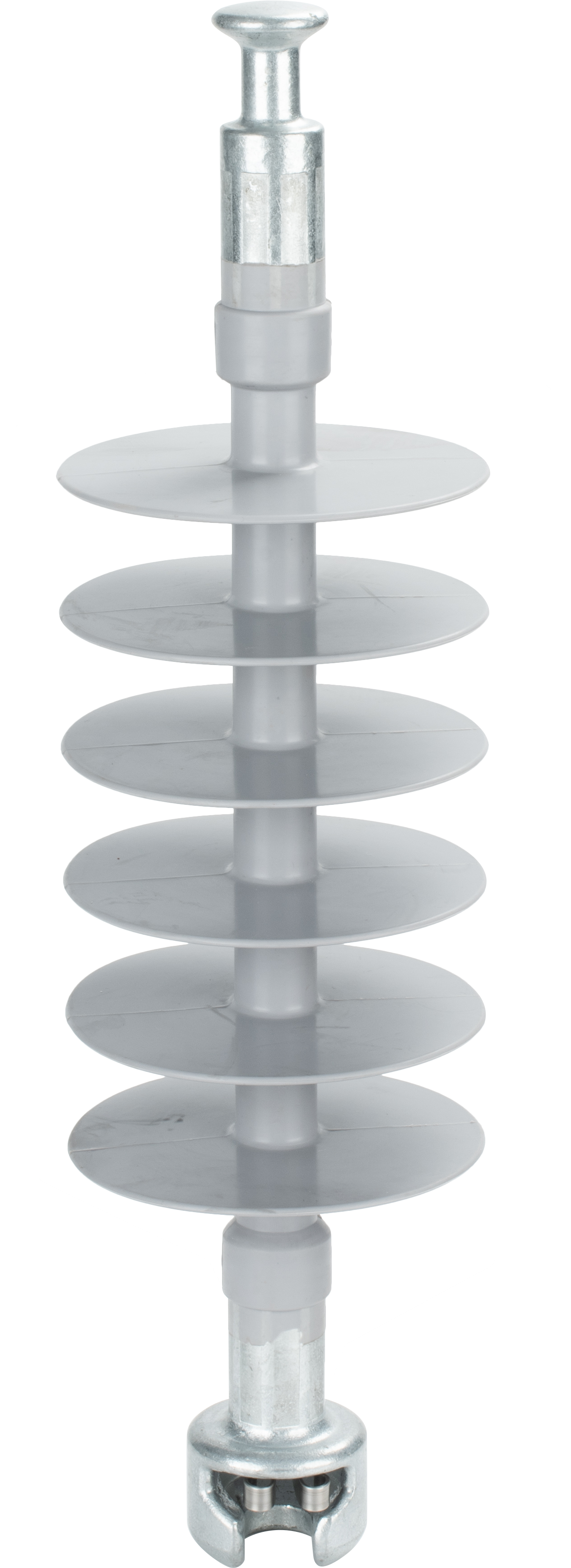
Published data for FXB-24-70-785mm: rated voltage 35 kV; lightning impulse withstand voltage >230 kV; power frequency 1-minute wet withstand voltage >95 kV; minimum creepage distance >1050 mm; rated bending load 5 kN; materials silicone, fiberglass and carbon steel/C45; type suspension long rod.
The creepage figure is the headline. More than 1050 mm of creepage distance on a single long rod means a much shorter structure envelope than a multi-disc string with equivalent creepage, which is why long rod designs are frequently specified for polluted, humid or dust-affected routes. The rated bending load of 5 kN applies to cantilever-style loading on the rod; it does not replace the string-strength calculation for a suspension position, which is why the mechanical duty must be defined by the engineer rather than inferred from the model code.
Practical warning on model codes: always design against the published electrical data on the data sheet, not against the digits embedded in a catalogue model name. For FXB-24-70-785mm, the published rated voltage is 35 kV — that is the figure that belongs in your specification revision.
Metal end fittings: the part that decides whether any of this works
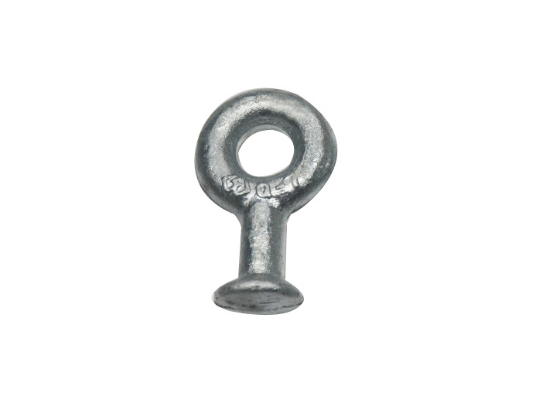
Insulator performance is only as good as the interface. The Ball-Head Suspension Ring QP-7 is published with a designated coupling size of 16, a rated failing load of 70 kN, a weight of 0.3 kg and a hot-dip galvanized steel finish. Coupling size 16 matches the connection structure code 16 published for the U70BP/146D porcelain unit — a concrete example of why the coupling code, not just the material, must be written into the purchase specification. Hot-dip galvanizing matters because electrochemical corrosion at the cap–pin or rod–fitting interface is a recognised long-term failure path on outdoor lines, particularly in humid and coastal environments. CECI also manufactures forged and cast metal fittings and overhead line hardware, and its catalogue additionally covers surge arresters, fuse cutouts, end fittings and FRP rods — useful when a project needs the fittings, protection and hardware from one qualified source.
Step-by-Step Breakdown: choosing a material and type for a project
The workflow below can be run against any insulator quotation, whatever the supplier.
- Fix the mechanical duty first. Decide whether the position is axial tension/suspension, cantilever post, or bending-loaded long rod. Only then compare numbers: 70 kN electromechanical failing load (U70BP/146D), 10 kN cantilever (70B), or 5 kN rated bending load (FXB-24-70-785mm).
- Set the electrical requirement. Rated voltage, lightning impulse withstand and power frequency wet withstand define the electrical envelope. FXB-24-70-785mm publishes 35 kV rated voltage, >230 kV lightning impulse withstand and >95 kV power frequency 1-minute wet withstand; 70B publishes 45 kV wet, 65 kV dry and 135 kV puncture.
- Translate the pollution level into creepage. Compare published creepage distance against the site's pollution class. Published values here are 255 mm for the 70B post and >1050 mm minimum for the FXB-24-70-785mm long rod.
- Confirm the coupling and fittings interface. Match connection structure code (16 for U70BP/146D) to the fitting's designated coupling size (16 for the QP-7 ring), and confirm the fitting load rating covers the position's duty — 70 kN for the QP-7.
- Check the environmental specifiers. For UV aging, humidity, dust storms and sand abrasion, confirm the published material set — silicone, fiberglass and carbon steel/C45 for the polymer long rod, glass for the 70B post, porcelain for the U70BP/146D disc.
- Decide the maintenance model. Disc-type units are replaced individually at string level and a failed glass disc is visually identifiable; a polymer long rod is a single unit and is normally replaced as a whole. Project teams working on remote lines often accept a higher unit cost for easier inspection, and the reverse is equally valid.
- Compare delivered cost, not piece price. Fittings count, string length, packaging weight and site labour differ by type, so the meaningful comparison is cost per installed position.
- Verify documentation and supply terms. Ask for the type-test report for the exact model against IEC 61109 or IEC 60383-1, confirm routine testing practice (CECI applies 100% test), and confirm MOQ, lead time and customization scope in writing.
Use Cases: which model fits which project
Suspension and tension positions on 35 kV-class distribution and sub-transmission lines. Long rod polymer units such as FXB-24-70-785mm are specified where creepage distance, low weight and reduced handling effort matter — including routes exposed to humidity, dust and UV. This is the application segment where composite suspension designs have gained the most ground, consistent with the 48.4% segment share reported for suspension insulators in 2024.
Post-mounted distribution applications. The 70B glass line post suits structures where a 10 kN cantilever duty and 255 mm creepage are adequate, and where visual fault identification is valued. Brown glazed glass also matches conventional distribution aesthetics in many markets.
Disc suspension and tension strings. Where string strength and disc-level replacement strategy dominate, the porcelain U70BP/146D with its 70 kN rating and 146 mm structural height remains the conventional choice, particularly in substation and string assembly work.
Rail and heavy-transport environments. Rail transit electrification is a standard project type for these insulators, alongside substation and ground equipment insulation. The QP-7 suspension ring's hot-dip galvanized finish and defined coupling size support the hardware consistency that catenary work demands.
Project experience reference. CECI reports insulator supply of 10,000 units over a three-year period to utility companies, power EPC contractors, railway operators and distributors in Brazil, Italy, Türkiye and Vietnam. The applications covered mechanical support and insulation on transmission lines, substation insulation, railway catenary or ground equipment insulation, and fuse and overvoltage protection. The reported result: using polymer and glass insulators can enhance line stability, reduce maintenance intensity and improve pollution resistance — with lightweight designs, anti-pollution flashover and aging resistance, customizable end fittings and FRP rod core supply, and OEM/ODM support as the stated highlights.
Comparison Table: published parameters, model by model
All values below are the published specifications of the three CECI models. “Not published” means the value was not stated in the source data for that model and must be requested from the supplier before it is used in a design.
| Criterion | U70BP/146D (porcelain) | 70B (glass) | FXB-24-70-785mm (polymer) |
|---|---|---|---|
| Body material | Porcelain | Glass | Silicone, fiberglass, carbon steel/C45 |
| Insulator type | Porcelain disc unit, connection structure code 16 | Post line | Suspension long rod |
| Rated mechanical parameter | 70 kN rated electromechanical failing load | 10 kN cantilever load | 5 kN rated bending load |
| Structural height | 146 mm (nominal structural height H 146 mm) | Not published | Not published |
| Disc diameter | 255 mm (nominal) | Not applicable | Not applicable |
| Minimum arcing distance | 450 mm | Not published | Not published |
| Creepage distance | Not published | 255 mm | >1050 mm (minimum) |
| Voltage data | Not published | PF wet 45 kV; PF dry 65 kV; puncture 135 kV | Rated 35 kV; lightning impulse withstand >230 kV; PF 1-min wet withstand >95 kV |
| Colour | Not published | Brown | Not published |
| Typical position role | Disc suspension or tension string | Line post on structure | Suspension long rod |
Secondary trade-offs that do not appear in a parameter sheet
| Trade-off | Porcelain disc | Glass | Polymer long rod |
|---|---|---|---|
| Weight and handling | Dense ceramic body; strings are comparatively heavy | Dense glass body; similar handling profile to ceramic discs | Long rod designs are generally lighter for a comparable mechanical duty, which eases manual handling and reduces transport weight |
| Inspection and replacement | Replaced disc by disc at string level | A failed disc shatters, so it is visually identifiable and can be replaced individually | Single monolithic unit; damage normally means replacing the whole unit |
| Pollution and ageing behaviour | Stable but heavier strings need more envelope for the same creepage | Puncture withstand published at 135 kV, above its flashover values | Silicone housing is chosen for hydrophobic surface behaviour; >1050 mm creepage supports polluted and humid routes |
| Cost comparison basis | Unit price is a weak basis across different insulator types. Compare cost per installed position, including end fittings such as the QP-7 suspension ring, string length, packaging weight and site labour. | ||
FAQ
Which standard applies to each insulator material?
Composite (polymer) insulators for high-voltage overhead lines operating above 1000 V AC are governed by IEC 61109, whose latest edition is 2025. Ceramic and glass insulators for overhead lines with a nominal voltage above 1000 V are tested under IEC 60383-1. In practice, a 35 kV polymer long rod such as FXB-24-70-785mm and a glass line post such as 70B are evaluated against different test programmes, so buyers should compare type-test reports per standard — and check which edition and which exact model the report covers — instead of comparing a single certificate line on a website.
How do I decide between porcelain, glass and polymer for a specific project?
Decide in this order: mechanical duty, electrical requirement, creepage, then material. For suspension or tension positions on 35 kV-class lines needing >1050 mm creepage with lighter handling, the FXB-24-70-785mm polymer long rod fits. For post-mounted distribution positions with a 10 kN cantilever duty and 255 mm creepage, the 70B glass line post fits. For disc suspension or tension strings where a 70 kN rated electromechanical failing load and disc-level replacement are required, the U70BP/146D porcelain unit fits. Selecting material before duty is the most common cause of re-specification later in the project.
What drives the delivered cost of an insulator, if not the unit price?
Fittings count, string length, transport weight and site labour all move the total. A disc-type string needs more units and more fittings per position than a long rod carrying the same creepage, while a long rod is replaced as a complete unit rather than disc by disc if it is damaged. That is why the useful commercial comparison is cost per installed position — including end fittings, packaging and freight — and why unit price alone can point buyers towards the wrong option.
What should I confirm before placing a production order?
Confirm four things in writing: the coupling interface, for example connection structure code 16 matching the QP-7 suspension ring's designated size of coupling 16; the type-test report for the exact model against the correct standard; the routine test regime, where CECI applies 100% test; and the customization scope. CECI offers OEM/ODM with customization on voltage, creepage distance, lightning impulse withstand voltage, bending load, colour and logo, and can supply end fittings and FRP rod cores. Where a real installation position is available, validating the first article there before full release is the most reliable way to catch interface or clearance problems.
What are the MOQ and lead time, and how do I choose an insulator manufacturer for power transmission projects?
CECI's published supply terms are an MOQ of 500 units and a lead time of 30–45 days, with monthly capacity of 500 tons and 100,000 pieces. When evaluating any manufacturer for transmission and distribution projects, check the same four points: whether the factory produces all three material families (polymer, porcelain and glass) plus metal fittings, so interfaces stay consistent; whether the published parameters are complete enough to design against; whether the quality regime is stated, since CECI applies 100% test; and whether customization and end-fitting supply are handled in-house. China Energy and Chemical Industry Co.,Ltd has a 30,000 m² facility, around 100 employees, a team of 8 R&D engineers and an annual output of 8,000,000 units, with a 95% export ratio and customers in markets including Russia, Vietnam, France, Spain, Italy, Türkiye, Brazil, Poland, Indonesia and Saudi Arabia, reaching more than 40 countries. Buyers who want to move straight to a commercial comparison can review the CECI insulator range and request a quotation or sample discussion for a specific position.
Conclusion: compare the duty, then the material
The porcelain U70BP/146D, the glass 70B and the polymer FXB-24-70-785mm are not three versions of one product — they are three answers to three different project questions. One is rated by electromechanical failing load, one by cantilever load, one by bending load; one is a disc unit, one is a line post, one is a long rod. The comparison that actually protects a project is a comparison of published parameters against a defined duty: mechanical loading, creepage distance, withstand voltages, coupling code, fitting rating, replacement strategy and delivered cost per installed position.
Where the source data has gaps — as it does for the creepage distance of the porcelain disc unit, or the dimensions of the glass post — the correct next step is to request the missing values from the supplier and place them into the specification, rather than to assume a value or borrow one from another model. That single discipline prevents most insulator-related re-work on transmission, distribution, substation and rail electrification projects.
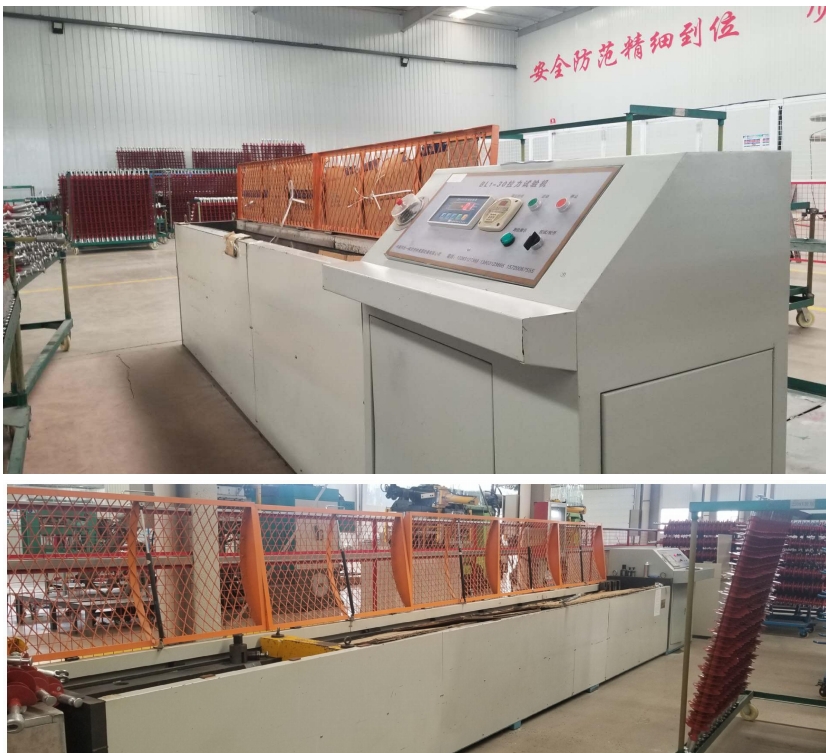
Next step: get the parameters you are missing
If you are comparing porcelain, glass and polymer insulators for a live project, the fastest route forward is a parameter-level quote. Send the position, voltage class, creepage requirement and coupling interface, and CECI can confirm which of the three material options fits — plus the fittings and hardware to match.
- Email: sales@gridinsulators.com
- Tel: +86 15038311850 | WhatsApp: +86 19515526916
- Website: www.gridinsulators.com
- Download the full catalogue: 2025 CECI catalogue of polymer insulators and glass insulators (PDF)
Have Questions or Need More Details?
Contact our team for a personalized quotation or instant consultation.
Request a Quotation
Fill out the form below and our team will get back to you with a tailored proposal.
WhatsApp Direct Chat
Prefer to chat in real-time? Message us on WhatsApp for instant assistance & quick answers.
- Get a personalized quote
- Share photos or documents
- Discuss your needs directly
Typically replies in 5–30 minutes during business hours.