Long-Term Insulator Supply Partnership: Purchase Terms, Acceptance & After-Sales FAQ
Long-Term Insulator Supply Partnership: Purchase Terms, Acceptance & After-Sales FAQ
A long-term insulator supply partnership is a written agreement that governs the repeated supply of porcelain, glass and polymer insulators and their metal fittings across multiple orders. It fixes three things before the first shipment: the purchase terms, the acceptance documents that prove each batch matches its specification, and the after-sales obligations that apply when a unit has to be replaced or investigated. This page answers the questions utility buyers, EPC contractors and distributors raise when a trial order is converted into an annual or project-frame contract.

Composite polymer insulator — one of the four product families covered by a long-term insulator supply agreement.
What changes when a single purchase becomes a partnership
A single insulator purchase is judged on one delivery. A multi-order agreement is judged on the fourth and fifth delivery — whether the same dimensions, the same coating specification, the same test evidence and the same response time still apply two years later.
Four failure points repeat in insulator frame agreements:
- Documentation continuity. A type-test report issued for one voltage class or one product family is filed once, then quietly quoted for a different product. The agreement has to state which report belongs to which product and which standard it references.
- Dimensional continuity. Interfaces must repeat across batches. On the products described on this page, that means the connection structure code (16 on the porcelain insulator U70BP/146D) and the coupling size (16 on the ball-head suspension ring QP-7) have to be restated in every order, not assumed.
- Evidence scope by material. Porcelain and glass sit under a different IEC series from composite and polymeric insulators. A report held for one material is not proof of conformity for another.
- After-sales obligations. Without a written spares and replacement clause, emergency restoration becomes a new negotiation in the middle of an outage.
Industry background: documentation is the real negotiation
Demand for overhead line insulators tracks grid investment rather than consumer spending. Straits Research estimates the global insulators market at USD 15.19 billion in 2026 across electrical, thermal and sound insulators (Straits Research, 2026), while Market Research Future sizes the composite insulator segment at USD 6.792 billion in 2025 (Market Research Future, 2025). Both figures describe market value; neither says anything about a specific supplier's capability, which is why buyer diligence in this category stays document-based.
The reason is structural: insulator conformity is defined by standards that are split by material, and each standard defines its own test methods and acceptance criteria. The table below summarises the standard families a long-term agreement normally references.
| Standard / reference | Scope | Where it belongs in an agreement |
|---|---|---|
| IEC 61109:2025 | Composite suspension and tension insulators for overhead lines, AC above 1,000 V and DC above 1,500 V; definitions, test methods, acceptance criteria | Type-test evidence for composite suspension/tension units |
| IEC 61466-1 / IEC 61466-2 | Composite string insulator units above 1 kV: strength classes, end fittings, dimensions and characteristics | End-fitting geometry and strength class in the drawing |
| IEC 60383-1 / IEC 60383-2 | Ceramic or glass insulator units; insulator strings and insulator sets, above 1 kV | Acceptance basis for porcelain and glass units |
| IEC 62217 | Polymeric high-voltage insulators for indoor and outdoor use; general definitions, test methods, acceptance criteria | Polymeric housing evidence beyond overhead-line-specific standards |
| IEC 61952-1:2019 | Composite line post insulators for AC systems above 1,000 V | Line post configurations, where specified |
| IEC 60168 | Tests on indoor and outdoor post insulators of ceramic material or glass above 1,000 V | Porcelain/glass post and line post test route |
| IEC 60815-1 / -2 / -3 | Selection and dimensioning of high-voltage insulators for polluted conditions | Creepage distance justification against site pollution |
| IEC 60507 | Artificial pollution tests on high-voltage ceramic and glass insulators for AC systems | Pollution test evidence for porcelain and glass only |
| ISO 1461 / ASTM A153/A153M | Hot-dip galvanized and zinc coating requirements on fabricated iron and steel hardware | Coating clause for metal end fittings and hardware |
| HS 8546 / 8546.10 / 8546.20 / 8546.90 | Customs classification of electrical insulators of any material — glass, ceramics, other | Customs and shipment documentation |
Scope rule: IEC 60507 covers ceramic and glass insulators, not polymeric housings, and IEC 60168 does not cover polymeric line post insulators. When a specification is copied from one product line to another, the test clause usually stops matching the product. Confirm the clause against the material actually being purchased.
Where a buyer's specification names an independent high-voltage laboratory scheme as the acceptable proof route — KEMA is one frequently referenced example — the certificate should be verified with the issuing laboratory, including the standard referenced, the voltage class and the validity date, rather than accepted from a catalogue page. The same discipline applies to any third-party mark written into an acceptance clause.
The four product families a supply agreement has to cover
China Energy and Chemical Industry Co., Ltd. (CECI) is a Zhengzhou, Henan–based manufacturer and exporter of power equipment: polymer insulators, porcelain insulators, glass insulators, metal fittings for insulators and overhead line hardware fittings and accessories, alongside surge arresters, fuse cutouts, end fittings and ERP rods. The company was established in 2017 and has grown from a power company background; its products are exported to more than 40 countries, with export business accounting for 95% of total sales and major markets including Russia, Vietnam, France, Spain, Italy, Türkiye, Brazil, Poland, Indonesia and Saudi Arabia.
Production is carried out on a 30,000 m² manufacturing facility with an annual production capacity of 8,000,000 units, approximately 100 staff and an R&D team of 8 engineers. OEM and ODM services are available. Those figures matter in a long-term agreement because they describe the volume envelope a frame contract is drawing on — they are company-reported capacity, not an independent audit result.
Porcelain insulator U70BP/146D
The U70BP/146D is a porcelain insulator with a rated electromechanical failing load of 70 kN, a nominal structural height of 146 mm, a nominal disc diameter of 255 mm, a minimum arcing distance of 450 mm and a connection structure code of 16. It is intended for electricity industry applications.
Glass insulator 70B
The 70B is a glass post line insulator for overhead power lines. It has a creepage distance of 255 mm, a cantilever load of 10 kN, a power frequency dry withstand voltage of 65 kV, a power frequency wet withstand voltage of 45 kV and a power frequency puncture voltage of 135 kV. The unit is supplied in brown.
Polymer insulator FXB-24-70-785mm
The FXB-24-70-785mm is a suspension long rod insulator for power transmission and distribution projects, with a rated voltage of 35 kV, a rated bending load of 5 kN, a minimum creepage distance greater than 1,050 mm, a power frequency 1-minute wet withstand voltage greater than 95 kV and a lightning impulse withstand voltage greater than 230 kV. The housing is silicone, the core rod is fiber glass and the metal fittings are carbon steel/C45.
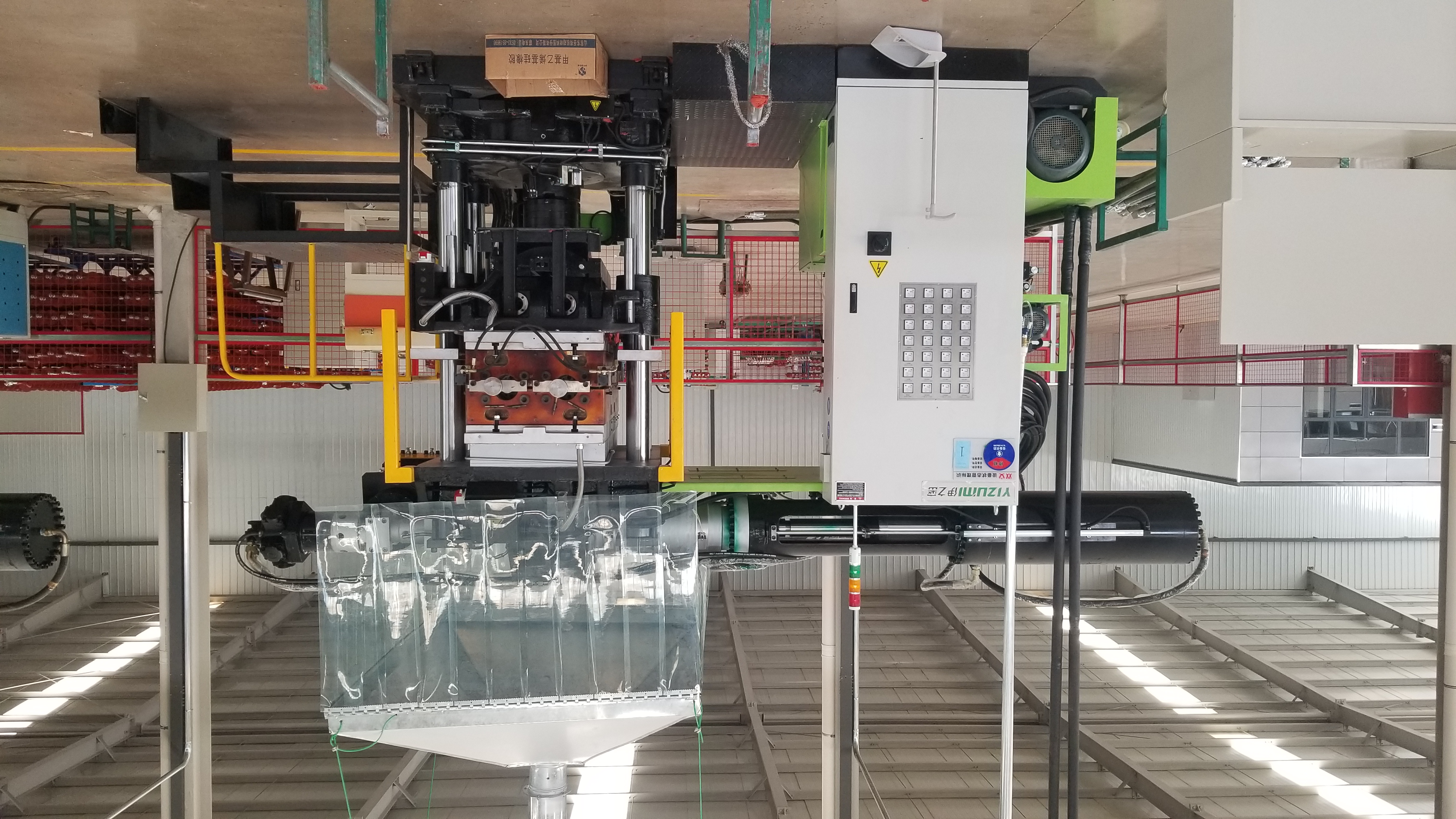
Vulcanization production equipment — housing production is one of the process steps an audit visit typically reviews.
Ball-head suspension ring QP-7
The QP-7 is a metal fitting made of hot-dip galvanized steel, with a designated coupling size of 16, a rated failing load of 70 kN and a net weight of 0.3 kg. It is a separate line item in the agreement, not a free accessory: fittings have their own coating clause and their own replacement cycle.
Step-by-step: from RFQ to a repeating order
Step 1 — Fix the technical scope by material
List every insulator type in scope with its material, rated voltage, mechanical load and creepage requirement, then attach the standard family that governs it. Keep porcelain/glass (IEC 60383 series) and composite/polymeric (IEC 61109, IEC 61466, IEC 62217) in separate line items. A mixed scope in one line item is the most common reason an acceptance discussion restarts after the first delivery.
Step 2 — Define the acceptance document pack
The pack normally contains: the quality management certificate, the type-test report that matches the product and voltage class, the dimensional record against the agreed drawing, the galvanizing record against ISO 1461 or ASTM A153/A153M as specified, and the packing and marking specification. CECI holds ISO 9001 certification and an FPQ-35/6(5) test report; both are documents a buyer can request and file in this pack. Ask for them before the price negotiation, not after the purchase order.
Step 3 — Lock the interfaces in writing
Interfaces repeat or the string does not assemble. State the connection structure code and coupling size explicitly — code 16 on the porcelain unit and coupling size 16 on the QP-7 ring are the values that must be restated on each release. Add the arcing distance (450 mm on the U70BP/146D) and the creepage distance (255 mm on the 70B; greater than 1,050 mm on the FXB-24-70-785mm) to the inspection sheet, so a dimensional drift is caught before dispatch.
Step 4 — Settle the commercial terms
Price basis, currency, Incoterm, quantity bands and delivery scheduling are confirmed against the actual requirement in the quotation, so this page does not publish fixed figures. What the agreement should do is fix the structure: how price is reviewed, which quantity band each schedule call falls into, how partial shipments are handled, and which documents travel with each shipment. Without that structure, every repeat order becomes a new commercial discussion.
| Term | What the agreement should state | Why it matters at repeat order stage |
|---|---|---|
| Technical scope | Product, model, material, rated values, governing standard per line item | Prevents a substitute standard or substitute material being delivered against the same line item number |
| Drawing and interface data | Connection structure code, coupling size, key dimensions, tolerances | Keeps batch 4 interchangeable with batch 1 |
| Acceptance documents | Named certificates and reports per product, submitted before dispatch | Turns quality into a document check rather than a verbal assurance |
| Coating and finish | ISO 1461 or ASTM A153/A153M, stated per fitting, plus colour where relevant | Corrosion performance in coastal and high-humidity destinations depends on this clause |
| Packaging and marking | Unit marking, batch identification, pallet or crate specification | Enables batch traceability on site and faster claims handling |
| After-sales and spares | Spares ratio, replacement lead-time route, failure investigation process, named contact | Defines what happens during storm restoration instead of negotiating it then |
| Review and change control | Annual review, notification duty before any process or material change, re-test trigger | Stops a silent process change from invalidating the filed type-test evidence |
Step 5 — Set the shipping and customs documentation
Insulators are classified under HS heading 85.46, with glass in 8546.10, ceramics in 8546.20 and other materials in 8546.90. Agree which subheading applies to each product line, and confirm that the commercial invoice, packing list and certificate of origin match it. A classification mismatch between the quotation and the shipment documents is a customs problem, not a technical one, and it surfaces late.
Step 6 — Write the after-sales clause before award
The after-sales clause should say who is contacted, within what process, with what evidence, and how a replacement unit is scheduled. Material choice changes what that clause looks like: glass is visually inspectable in line patrols, which supports fault location during restoration work; porcelain units are replaced as discrete discs, so dimensional records decide whether a spare fits the existing string; polymer long rod units have light weight listed among the required product properties, which matters for manual handling at height; and fittings such as the 0.3 kg QP-7 ring belong in the spares plan as consumables. None of these are cost estimates — replacement cost depends on the order, the destination and the freight route, and should be quoted per case.
Where these insulators are used
The application profile behind these products is public electrical equipment operating continuously, 24/7: rural and urban power grid upgrading, rail transit electrification, high-voltage transmission lines, substations and converter stations, and wind power projects. Supporting equipment typically includes power distribution cabinets, and the products are used for power transmission and distribution.
Operating conditions are stated as high temperature, high humidity, outdoor harsh climate, UV aging, dust storms that cause rapid dust accumulation with wind-and-sand abrasion on the shed surface, and instantaneous impulse overvoltage. The corresponding requirements listed for these applications are anti-aging and UV resistance, high mechanical strength, high insulation performance, light weight, good bending resistance, water penetration resistance, stable metal fittings with anti-electrochemical corrosion, and non-toxic, environment-friendly construction. The scenario is described as common in Spain, France, Italy and Türkiye.
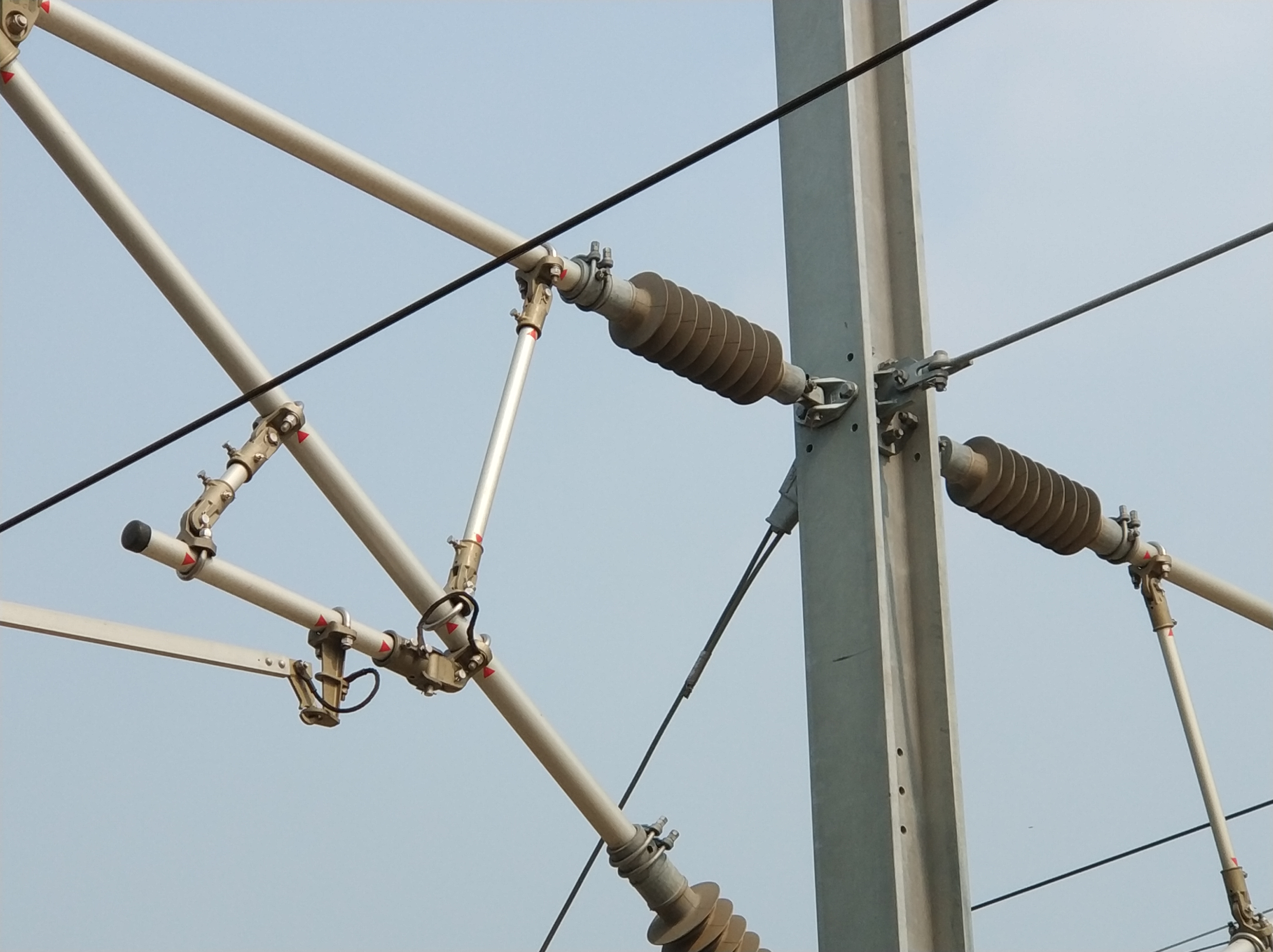
Rail transit electrification: one of the project types a frame agreement is typically written to cover.
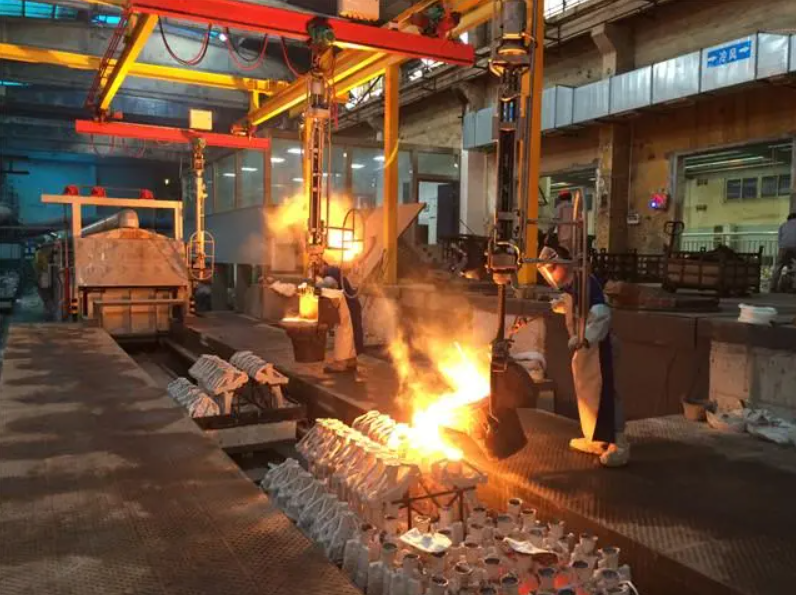
Casting equipment — metal end fittings carry their own coating and strength clauses in the agreement.
Product comparison: verified ratings and acceptance focus
The table below compares the four items on the parameters that are actually verified, and states what acceptance should check for each. It is a specification comparison, not a ranking — the correct choice depends on the line design, the pollution level and the material strategy of the buyer.
| Product | Material / type | Key verified parameters | Standard family to cite | After-sales consideration |
|---|---|---|---|---|
| Porcelain insulator U70BP/146D | Porcelain | Rated electromechanical failing load 70 kN; structural height 146 mm; nominal disc diameter 255 mm; minimum arcing distance 450 mm; connection structure code 16 | IEC 60383 series (ceramic/glass units) | Replaced as discrete discs; dimensional records decide whether a spare fits the existing string |
| Glass insulator 70B | Glass, post line | Creepage distance 255 mm; cantilever load 10 kN; dry withstand 65 kV; wet withstand 45 kV; puncture voltage 135 kV; brown | IEC 60383 series; IEC 60507 for pollution testing (ceramic/glass scope) | Glass is visually inspectable in line patrols, which supports fast fault location during restoration |
| Polymer insulator FXB-24-70-785mm | Silicone housing, fiber glass core, carbon steel/C45 fittings; suspension long rod | Rated voltage 35 kV; rated bending load 5 kN; minimum creepage distance >1,050 mm; wet withstand >95 kV; lightning impulse withstand >230 kV | IEC 61109 / IEC 61466 series; IEC 62217 for polymeric scope | Light weight is a listed product property, which matters for manual handling at height |
| Ball-head suspension ring QP-7 | Hot-dip galvanized steel | Coupling size 16; rated failing load 70 kN; net weight 0.3 kg | ISO 1461 or ASTM A153/A153M for the coating | Low-weight consumable; should be a line item in the spares plan rather than an assumed free accessory |
Reading the table correctly: parameters are stated per model as verified product data. They are not interchangeable across models, and a value verified for one model should not be written into a specification for another without the supplier confirming it in writing.
Frequently asked questions
1. Which standards and documents should a long-term insulator supply agreement reference for compliance?
The agreement should reference the standard that matches the material of each line item: IEC 60383-1/-2 for ceramic or glass units and strings, IEC 61109:2025 for composite suspension and tension insulators on AC above 1,000 V and DC above 1,500 V, IEC 61466-1/-2 for composite string units and their end fittings, IEC 62217 for polymeric high-voltage insulators, and IEC 60815-1/-2/-3 when creepage distance has to be justified against site pollution. Coating on steel fittings belongs under ISO 1461 or ASTM A153/A153M, and customs documentation under HS 85.46. The document pack should then contain the ISO 9001 certificate, the type-test report matching each product and voltage class, dimensional records and coating records. CECI holds ISO 9001 certification and an FPQ-35/6(5) test report that can be requested for this pack.
2. What capability evidence can a supplier actually provide before a frame contract is signed?
Capacity, workforce and engineering depth are normally company-reported: CECI reports a 30,000 m² facility, an annual production capacity of 8,000,000 units, approximately 100 staff and an R&D team of 8 engineers, with OEM and ODM services available and exports to more than 40 countries at 95% of total sales. Those figures describe scale, not independent audit results. The harder evidence is product-level: verified model data such as the 70 kN electromechanical failing load of the U70BP/146D, the 10 kN cantilever load of the 70B, the greater than 1,050 mm creepage distance of the FXB-24-70-785mm, or the 70 kN rated failing load of the QP-7. Buyers should ask for the drawing, the test report and the model-level values together, and confirm that all three describe the same product.
3. How should budget and price stability be handled in a multi-year agreement?
Price, quantity bands, currency and Incoterm are quoted against the actual requirement, so no fixed figure can be published in advance. What the agreement can fix is the review mechanism: the price basis, the review interval, the quantity band structure, the treatment of partial shipments and the document set that accompanies each shipment. Total cost of ownership then depends on replacement behaviour — the spares ratio, the handling method at height and the replacement route written into the after-sales clause — rather than on the unit price alone. Replacement cost itself should be quoted per case, since it depends on order size, destination and freight route.
4. Can samples be requested before signing a supply agreement?
Sample evaluation is a normal step before a frame contract, and it serves a specific purpose in this category: it lets the buyer check the drawing against the physical unit — connection structure code 16 on the U70BP/146D, coupling size 16 on the QP-7, the stated creepage distance on the 70B and the FXB-24-70-785mm — before committing to a multi-order schedule. Sample scope, quantity and the documents supplied with the sample should be agreed in writing in the same way as production orders. OEM and ODM requests can be discussed at the same stage.
5. How is lead time managed for repeat orders?
Delivery scheduling is confirmed per order against the agreed quantity band, so the practical control is the agreement structure rather than a single headline lead time: a schedule call process, a stated document submission point before dispatch, and a notification duty for any process or material change that could affect the filed type-test evidence. For urgent replacement, the after-sales clause should name the contact, the evidence required and the scheduling route. For a quotation, a sample request or the full product catalogue, contact CECI at sales@gridinsulators.com or +86 15038311850 with the model, voltage class and quantity.
Conclusion
A long-term insulator supply partnership is not secured by a low unit price; it is secured by a document structure that still holds at the fifth delivery. Fix the standard per material, restate the interfaces on every release, name the acceptance documents, and write the after-sales clause before the award — then the agreement is doing the work it was created for. For porcelain, glass and polymer insulators with matching metal fittings, CECI supplies against that structure from a 30,000 m² facility with an annual capacity of 8,000,000 units, exporting to more than 40 countries.
Next step: request the documents before the quotation
Send the model list, voltage class and quantity to sales@gridinsulators.com or call +86 15038311850, and request the ISO 9001 certificate, the FPQ-35/6(5) test report and the model drawings together with the offer.
The full product catalogue covering polymer and glass insulators, porcelain insulators and metal fittings is available for download: 2025 CECI catalogue of polymer insulators and glass insulators (PDF).
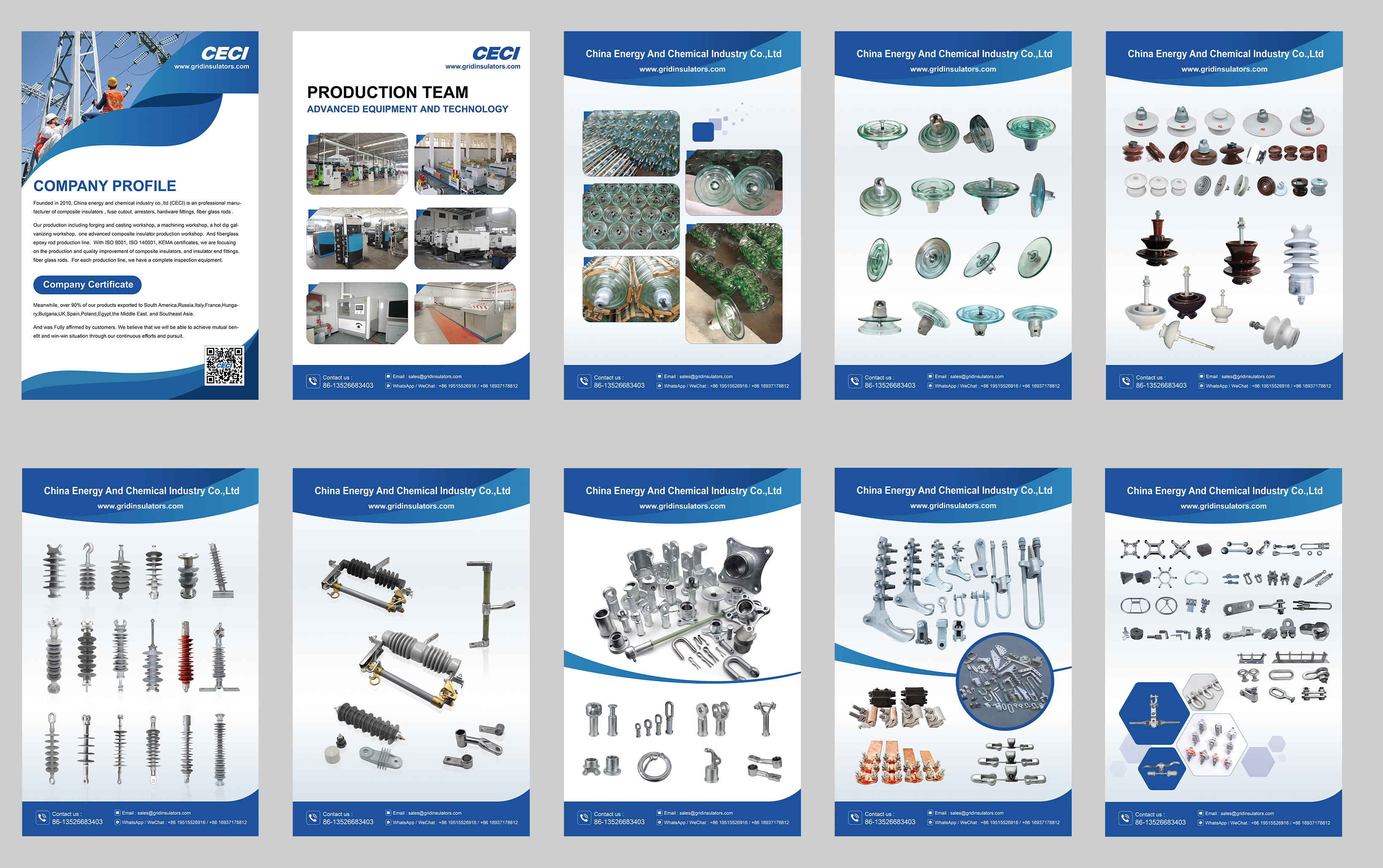
Download the CECI catalogue for the full insulator and fitting range.
China Energy and Chemical Industry Co., Ltd. — www.gridinsulators.com — Room 1502, NO. 12, Shangwu Waihuan Road, Zhengdong New District, Zhengzhou, Henan. Email: sales@gridinsulators.com; Tel: +86 15038311850; WhatsApp: +86 19515526916.
Have Questions or Need More Details?
Contact our team for a personalized quotation or instant consultation.
Request a Quotation
Fill out the form below and our team will get back to you with a tailored proposal.
WhatsApp Direct Chat
Prefer to chat in real-time? Message us on WhatsApp for instant assistance & quick answers.
- Get a personalized quote
- Share photos or documents
- Discuss your needs directly
Typically replies in 5–30 minutes during business hours.