
Composite vs Porcelain vs Glass Insulators: Total Cost & Performance Guide
Composite vs Porcelain vs Glass Insulators: Total Cost & Performance Guide
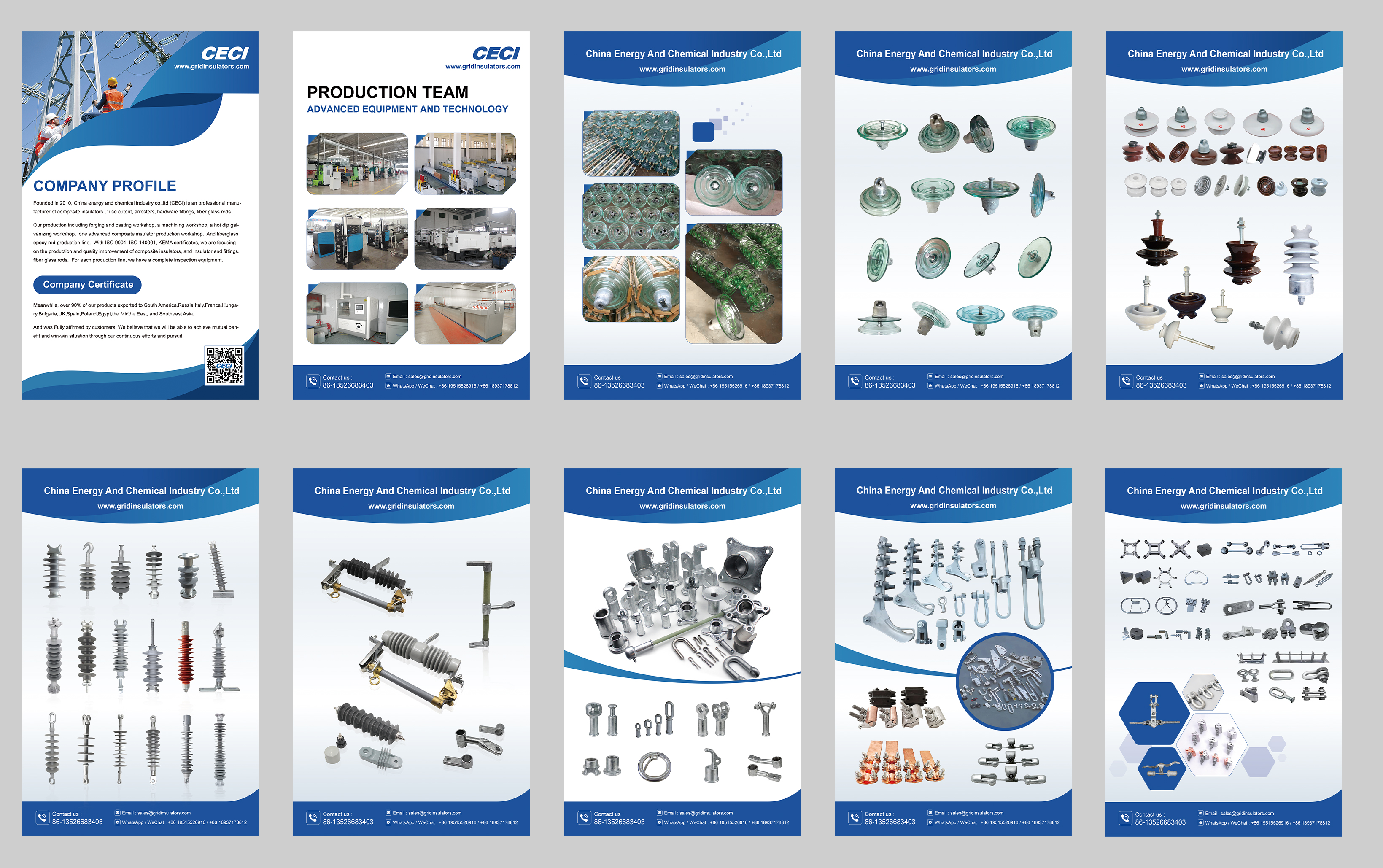
China Energy and Chemical Industry Co., Ltd (CECI) is a manufacturer of high-voltage insulators and line hardware, exporting to over 40 countries from its 30,000 m² facility. For grid operators and project buyers at the decision stage, choosing between composite (polymer), porcelain, and glass insulators directly impacts upfront investment, maintenance budgets, and long-term reliability. This guide provides a side-by-side comparison based on verified performance data, total cost of ownership, and application fit.
Why This Decision Matters for Your Grid Project
The global electrical insulator market was valued at USD 12.5 billion in 2023 and is expected to reach USD 18.4 billion by 2030 (Grand View Research). Within this, composite insulators alone accounted for roughly USD 3.42 billion in 2024, growing at a CAGR of 9.1% (Strategic Market Research). Choosing the wrong insulator type can inflate installation costs, increase outages, and raise maintenance expenses over decades of service. For buyers evaluating composite vs porcelain vs glass insulators, the differences in weight, installation time, maintenance, and emergency repair are critical decision factors.
Core Differences: Composite, Porcelain, and Glass Insulators
Polymer composite insulators are lightweight (about 50% lighter than porcelain/glass), pollution-resistant, impact-resistant, and save approximately 60% of installation time. They are well suited for heavy-pollution areas, long-span lines, and applications where weight reduction is a priority.
Glass and porcelain insulators offer advantages in heat resistance, high mechanical and electrical stability, and allow easy visual inspection without special equipment. They are preferred for environments requiring thermal stability and where visual crack detection is needed. Glass insulators, in particular, provide faster emergency repair (1–2 hours vs 4–6 hours for composite) and lower replacement costs.
Energy efficiency between the types is comparable; the real impact comes from insulation reliability and total outage/maintenance time. Selection should focus on total cost of ownership and reliability.
Step-by-Step Decision Framework for Insulator Selection
Step 1: Assess Operating Environment
Identify pollution level, temperature extremes, mechanical loads, and visual inspection requirements. Composite insulators excel in heavy-pollution, coastal, and dust-storm regions. Glass/porcelain are better where high thermal stability and visual checking are mandatory.
Step 2: Compare Total Cost of Ownership (TCO)
Initial cost for composite insulators is approximately 10% higher than porcelain/glass. However, the annual maintenance cost for composite is about 40% lower, and maintenance cycles are longer. For glass insulators, the total replacement cost is 25% to 35% lower than traditional alternatives.
Step 3: Evaluate Installation & Logistics
Composite insulators reduce installation time by 60% due to their light weight. This translates into lower labor costs and shorter outage windows. Glass/porcelain are heavier but do not require special handling for impact avoidance (composite is impact-resistant).
Step 4: Plan for Emergency Repairs
Glass insulators can be repaired in 1–2 hours, while composite requires 4–6 hours. However, the cost to repair composite is 150% higher. If your grid experiences frequent storm damage, glass may offer faster restoration at lower immediate cost.
Step 5: Verify Supplier Quality & Certification
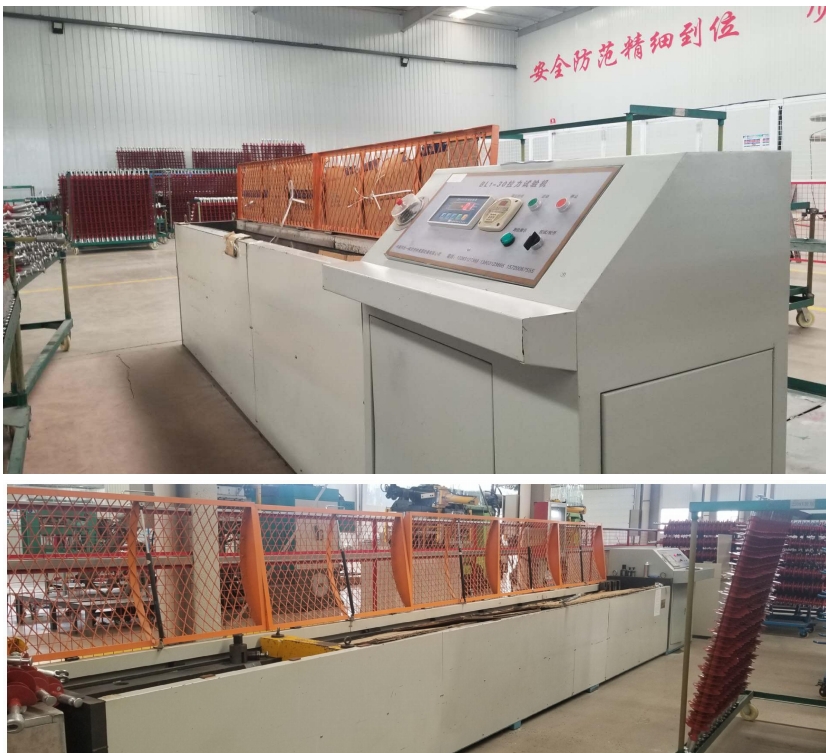
All insulators should be manufactured under ISO 9001 quality management systems and tested according to IEC standards (e.g., IEC 61109 for composite, IEC 60383-1 for ceramic/glass). CECI follows 100% test standards, carries out full batch testing, and provides complete valid compliance certificates.
Use Cases for Each Insulator Type
- Composite insulators: Rural and urban grid upgrades, rail transit electrification, long-span transmission lines, wind power projects, and substations in high-pollution or lightweight-requirement areas. Common in Spain, France, Italy, and Turkey.
- Glass insulators: High-temperature environments, regions where visual inspection is routine, and lines where rapid emergency restoration is critical (e.g., dense urban or critical infrastructure).
- Porcelain insulators: Applications requiring very high mechanical strength and established reliability, often in extra-high voltage (EHV) lines and substation bus supports.
Comparison Table: Composite vs Porcelain vs Glass Insulators
| Attribute | Composite (Polymer) | Porcelain / Glass |
|---|---|---|
| Weight | About 50% lighter | Heavier |
| Installation time saving | 60% faster | Baseline |
| Initial cost premium (composite vs porcelain/glass) | ~10% higher | Baseline |
| Annual maintenance cost (relative to porcelain/glass) | ~40% lower | Baseline |
| Maintenance cycle | Longer, less frequent | Standard |
| Emergency repair time | 4–6 hours | Glass: 1–2 hours |
| Repair cost premium (composite vs glass) | 150% higher | Baseline |
| Replacement cost (glass vs traditional) | — | 25–35% lower |
| Testing time saving (glass/porcelain vs traditional) | — | ~80% saving |
| Pollution resistance | Excellent | Good |
| Impact resistance | High | Low (breakable) |
| Visual inspection (without tools) | Not easy | Easy (glass: transparent) |
| Best suited for | Heavy pollution, long span, lightweight needs | Thermal stability, visual inspection, rapid repair |
Risk Management in Insulator Procurement
Key risks include delivery delays, quality consistency, shipping/customs issues, and insufficient certifications. CECI mitigates these through:
- ISO 9001 quality management system
- Full batch testing with third-party reports
- Clear contracts with lead-time clauses and pre-shipment inspection
- Dedicated project managers and staged deliveries
- Professional logistics team handling customs clearance
All CECI insulators undergo 100% test standards, and the manufacturer provides remote after-sales support.
Frequently Asked Questions
Which insulator manufacturer is better for composite vs porcelain?
Choosing the right manufacturer depends on product range, quality certifications (e.g., KEMA, ISO 9001), and experience with both material types. China Energy and Chemical Industry Co., Ltd (CECI) manufactures composite, porcelain, and glass insulators, along with metal end fittings and hardware. With 100% test standards, an 8-engineer R&D team, and exports to over 40 countries, CECI offers OEM/ODM customization and provides complete compliance certificates. For a detailed product catalog and pricing, visit CECI's website or request a quote by contacting sales@gridinsulators.com.
Next step for your project: Download the 2025 CECI catalog for complete specifications, or contact Richard at +86 15038311850 / sales@gridinsulators.com to discuss your specific insulator requirements.
Conclusion
There is no single “best” insulator type for every project. Composite insulators deliver lighter weight, faster installation, and lower long-term maintenance, making them ideal for pollution-prone and long-span applications. Glass and porcelain insulators offer superior thermal stability, quick visual inspection, and lower emergency repair costs. The final choice should balance upfront cost, operational environment, and total cost of ownership over the asset’s lifetime.
CECI provides all three types under one roof, backed by 100% testing, ISO 9001 quality management, and a dedicated project management system. Evaluate your specific needs against the comparison table above, then reach out to CECI for a quotation or sample.
Request a Quote or Sample Kit — Compare composite, porcelain, and glass insulators for your next project. Download the CECI Product Catalog (PDF) or contact sales@gridinsulators.com | Whatsapp: +86 19515526916
Have Questions or Need More Details?
Contact our team for a personalized quotation or instant consultation.
Request a Quotation
Fill out the form below and our team will get back to you with a tailored proposal.
WhatsApp Direct Chat
Prefer to chat in real-time? Message us on WhatsApp for instant assistance & quick answers.
- Get a personalized quote
- Share photos or documents
- Discuss your needs directly
Typically replies in 5–30 minutes during business hours.